There is a drawer in my writing desk that holds letters. Not many – perhaps nine or ten. But each one carries something a screen never could: the particular pressure of a pen, the slight crookedness of a line written in haste or tenderness, a smudge where a thumb pressed down. Evidence of a hand. Evidence of a life.
Many of us stopped writing letters. Not because we have less to say, but because we have found faster ways to say it. A message typed and sent in thirty seconds, read in ten, forgotten by the end of the day. We have confused speed with connection, and efficiency with care.
But I think something in us knows the difference.
What slowness teaches
The natural world does not hurry. Lichen grows at a rate so patient it is almost philosophical. A bluebell takes years to spread from a single bulb into a drift. The beech tree outside my window has been adding rings since before anyone living can remember.
There is something in us that responds to this pace – that feels like, when we slow to meet it, a kind of homecoming.
Writing a letter by hand asks for the same quality of attention. You cannot multitask your way through it. You must sit, choose your words, and begin again when a sentence doesn’t sound quite right. You must think about the person who will hold this paper, in a room you cannot see, at a time you cannot predict. And in that act of imagining them – really imagining them – something opens.
This is what letter writing shares with nature journalling, with botanical drawing, with any practice that refuses to be rushed: it returns us to ourselves. It makes us present. It is, in the quietest possible way, a form of attention.
The object in your hand
There is another dimension to letters that we rarely talk about: the beauty of the things themselves.
The paper with its soft weight. The slight resistance of a good nib. The envelope that was sealed and addressed. The picture stamp that was carefully selected and attached to the envelope. These are small rituals, and like all rituals they carry meaning beyond their function. They say: this took time. They say: you were worth my time.
I have been spending time lately with a passage from a book on mindfulness that describes the way ordinary objects – a glass of water, a coffee pot, some garlic bulbs arranged on a shelf – can become the source of what the author calls wordless, infinite rapture when we bring our full attention to them. The still life painter Chardin understood this. So did the Zen monk who advised the author to always respect inanimate things – those quiet presences that never cry out, but which, when we attend to them, sometimes speak.
A handwritten letter is exactly this kind of object. It sits in a drawer and waits. It carries, in its texture and its handwriting, the trace of a particular afternoon, a particular state of mind. Long after the writer has forgotten what they wrote, the paper holds it.
A practice worth returning to
If you feel called to write to someone you love, or someone you have been meaning to reach, don’t wait for the perfect moment or the right words. Simply find a quiet half hour, a pen and piece of paper that give you pleasure, and begin.
You do not need to say everything. Think of it as being like a walk – you set off in one direction and see where you end up.
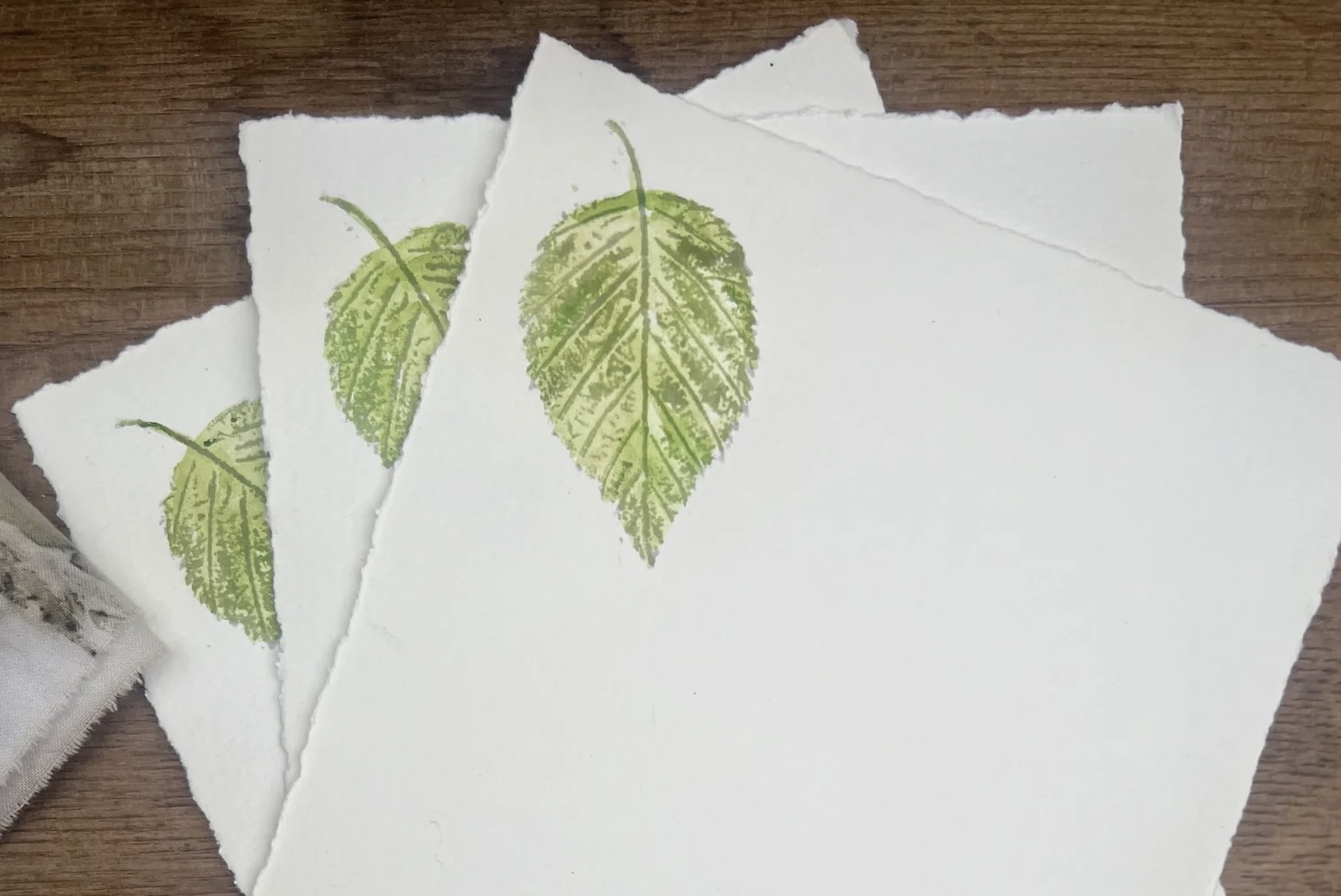
If you want the experience to feel as considered as the words themselves, at Moss & Maye I have put together a letter writing set that I believe is genuinely lovely: a vintage copy of The Home Letter Writer, handmade cotton rag writing papers painted by hand with botanical leaf designs (each one a little different from the last), a matching bookmark, and a vintage silver-plated stamp holder. It is the kind of thing you give to someone who still believes that words matter most when they are written slowly, with care, on paper that will last.
There is something quietly powerful about gathering these small, beautiful objects around you before you begin. They put you in the right frame of mind. They slow you down. They remind you that what you are about to do – reach across distance to another person – is not ordinary at all.
Stillness reveals the invisible, as silence reveals the essence.
If you find the time to write a letter this week, you may be surprised by what you find to say.
You can find the Botanical Letter Writing Set at mossandmaye.com. It is a thoughtful gift for writers, readers, and anyone who still believes some things are worth doing slowly.