There are days when the noise is too much.
Too many signals, too many screens, too many demands on the mind and the soul. And in those moments, something inside quietly aches for simplicity. Not the simplicity of having less, but of being more: more present, more grounded, more in rhythm with something older than the modern world.
Carl Jung understood this ache.
He saw how the machinery of modern life pulls us away from ourselves – and from the quiet intelligence of the natural world that once shaped us. For Jung, healing wasn’t about doing more, achieving more, or knowing more. It was about remembering.
“Natural life is the nourishing soil of the soul,” he wrote.
This philosophical idea was echoed by Martin Heidegger: “Any kind of uprooting from this basic reality is injurious to human development.”
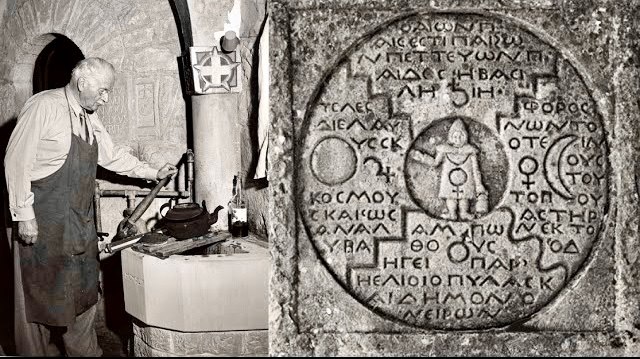
In his mountain house by Lake Zürich – Bollingen Tower – Jung lived this truth. He chopped wood, cooked over fire, and carved Latin sayings into stone with his own hands. There was no electricity. No running water. Just time, space, and silence. Not out of nostalgia, but necessity. For Jung, the soul needed a slower pace. A return to something elemental.
He wasn’t romanticising hardship. He was seeking balance. In a world spinning faster, he turned inward and outward at once – toward the psyche and toward the earth.
We tend to believe progress lies in complexity. But Jung urged us to see that growth also means simplifying – learning to listen again to the rhythms of nature, to the whispers of intuition, to the dreams that rise up when we pause long enough to notice.
This doesn’t mean retreating from life. It means reclaiming the parts of life that truly matter.
Time spent walking.
Time spent tending.
Time spent listening to the wind, the birds, the self.
In my own work, I have seen how often people long for this. They speak of exhaustion, yes – but also of yearning. For stillness. For meaning. For a sense of home inside their own body and mind.
And so, we might ask ourselves, gently:
- What would it mean to simplify – not just our schedules, but our selves?
- What have we overgrown in the name of modern life?
- And how might we return, not backwards, but inwards – to the wild, intuitive knowing we’ve never really lost?
Jung believed the natural world held keys to our healing. Not as metaphor, but as mirror.
It teaches us how to be – without striving.
How to grow – without forcing.
How to remember – without rushing.
And perhaps, most of all, how to live well, in quiet conversation with the world around us.
The wild remembers. So do you.
This post is part of a series – part 2 coming tomorrow

Leave a Reply