On the nature of awe, the things we cease to notice, and the extraordinary world concealed within the familiar.
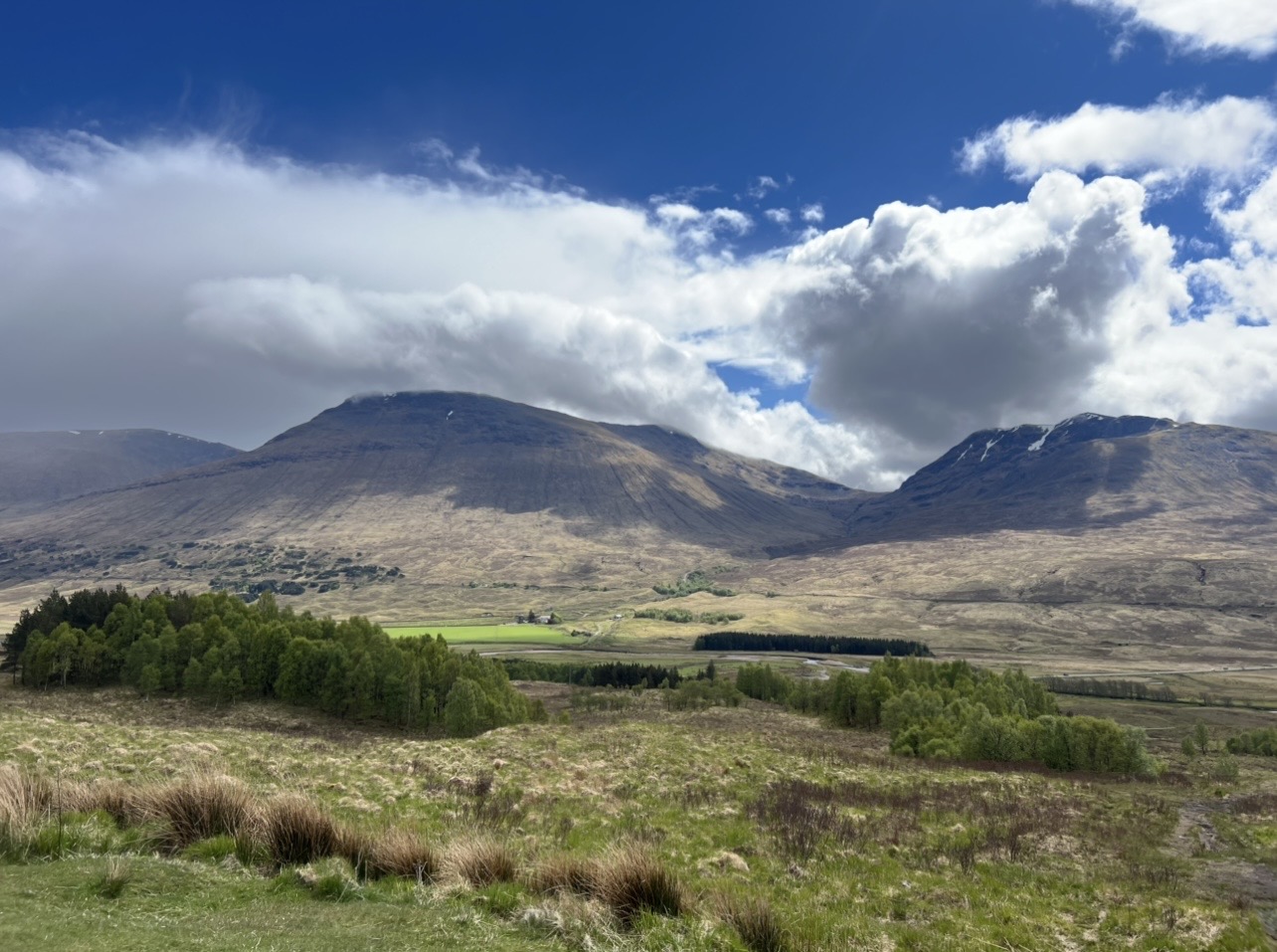
There is something about standing before a mountain that seems to alter the proportions of our lives, as though the difficulties we have carried with us, the worries that have occupied so much of our thinking, have momentarily been placed within a wider landscape in which they no longer possess quite the importance we have given them. We may have travelled many miles to reach such a place, yet the change that occurs within us seems curiously independent of the distance we have covered, for the mountain has done nothing to resolve our difficulties, nor has it offered any reassurance that the things troubling us will turn out as we hope, and still we may find ourselves breathing a little more freely, conscious of a world extending far beyond the boundaries of our immediate concerns. We often describe this experience as making us feel small, although I wonder whether the mountain has diminished us at all, or whether, in drawing our attention towards something that exists quite independently of our plans and disappointments, it has allowed us to recover a sense of belonging that our preoccupation with ourselves had temporarily obscured.
In 1747, the Scottish writer John Baillie published An Essay on the Sublime, exploring the effect of mountains, oceans and the heavens upon the human imagination, and suggesting that much of the elevation we experience before such sights arises from the mind discovering its own enlarged powers, reaching beyond what is immediately visible towards possibilities that seem almost without limit. Yet Baillie also recognised something curious about our response to grandeur, observing that familiarity gradually diminishes our admiration, so that even the heavens, whose immensity ought surely to astonish us, seldom move us as profoundly as they might because they have become part of our everyday surroundings. There is something rather troubling in this observation, for it suggests that we might spend an entire lifetime beneath a sky filled with worlds beyond our comprehension and gradually cease to find it remarkable, not because anything has diminished in the heavens themselves, but because we have grown accustomed to their presence. Baillie offers a possible escape from this condition when he suggests that imagination can render a familiar object new again, although I wonder whether what we require is not so much the invention of something new as the recovery of our capacity to encounter what is already there.
Consider the leaves lying beneath a tree in autumn, so numerous and familiar that we scarcely distinguish one from another, although each has grown according to its own particular history, responding to the light that reached it, the weather through which it passed, and the conditions that sustained it. We might pick one up and turn it over, noticing the branching veins, the uneven distribution of colour, perhaps a small area where an insect has fed or the tissue has begun to decay, and for a moment we are looking at something that has spent months participating in processes upon which much of life depends, gathering energy from sunlight, exchanging gases with the atmosphere, and contributing to the growth of a tree whose roots extend into a hidden world beneath our feet. The leaf is small enough to rest in the palm of a hand, yet the more closely we consider it, the less possible it becomes to understand it as a separate thing, for its existence leads us beyond its edges towards the tree, the soil, the atmosphere and the sun, until what appeared to be a single, insignificant object begins to reveal itself as part of a network of relationships extending far beyond anything we can see.
The mountain announces its immensity through distance and scale, while the leaf conceals its own within a form so familiar that we are tempted to overlook it, yet perhaps both are capable of bringing us to the same threshold, where the limits of our understanding become apparent and we are reminded that the world is not exhausted by what we happen to know of it. Psychologists Dacher Keltner and Jonathan Haidt have described awe as involving a perception of vastness, which need not be physical, together with the need to accommodate something that exceeds our existing understanding, and there is something particularly interesting in the possibility that such an experience may arise not only when we look towards an immense horizon, but when we look closely enough at something small to discover that it is not nearly as simple as we had supposed. The vastness of a mountain is immediately apparent, whereas that of a leaf may remain hidden until we begin to wonder about the processes that have brought it into being, but in either case the experience carries us beyond the familiar boundaries of our own thinking.

I wonder, however, whether the greatest obstacle to such encounters is not a lack of remarkable things, but the extraordinary ease with which we become accustomed to them. We know the shape of an oak leaf, the sound of a blackbird, the appearance of moss on an old wall, and because we can recognise these things almost without thought, we behave as though there is little more to discover, forgetting that the ability to identify something tells us remarkably little about the nature of its existence. A blackbird singing from the same tree each morning may become so familiar that its voice scarcely interrupts our thoughts, yet the bird continues to inhabit a world of territories, dangers, opportunities and relationships quite independent of our awareness, and the song that has become part of the background of our lives remains, for the bird, an act of considerable significance. Our familiarity with its presence has changed nothing about the importance of its life, although it may have changed almost everything about our willingness to notice it.
There is a similar paradox in breathing, that most continuous and essential of activities, upon which every moment of our lives depends and to which we ordinarily give almost no attention. We may become aware of our breath when we are frightened, exhausted or suddenly conscious of the stillness around us, yet for most of the day it continues without requiring our notice, drawing into our bodies air that has moved through forests, across oceans and over mountains, and participating in exchanges between ourselves and the living world that are so fundamental to our existence that we scarcely think of them at all. The air does not become less necessary because we have forgotten it, any more than the processes taking place within a leaf become less extraordinary because we have learned to recognise its shape, and perhaps there is something revealing in the fact that the things most intimately involved in sustaining our lives can become almost invisible through their very constancy.
We are inclined to seek wonder in what interrupts the ordinary course of our lives, in unfamiliar landscapes, extraordinary events and experiences sufficiently different from our daily existence to command our attention, yet much of what sustains us does so without spectacle, without announcing its importance or asking to be admired. The roots beneath a tree, the organisms working through the soil, the movement of water through living tissues and the exchange of gases between leaf and atmosphere continue whether we notice them or not, and although our knowledge of these processes may be considerable, knowledge does not necessarily protect us from the curious blindness of familiarity. Indeed, the more confidently we believe we understand something, the easier it may become to overlook the possibility that our understanding remains incomplete.

Perhaps this is why certain small encounters can affect us so unexpectedly, as when a robin follows us while we turn the soil, waiting for the creatures our disturbance may reveal, or when we notice a flower growing from a narrow crack in a wall and find ourselves wondering how its roots have established themselves in so little apparent space. Nothing particularly unusual has happened, and yet for a moment the familiar arrangement of the world has shifted, allowing another existence to become visible in its own right rather than merely as part of the scenery through which we conduct our lives. The robin has not appeared for our benefit, nor has the flower grown in order to demonstrate resilience, and perhaps the wonder of such encounters lies partly in recognising that their significance does not depend upon the meanings we choose to give them.
There is a difference, I think, between looking at something in order to recognise it and looking at it without knowing quite what we might discover, for recognition tends to bring an encounter to its conclusion, while curiosity allows it to continue. We identify the leaf, the bird or the flower, and in doing so may feel that the matter has been settled, although the name we have given it tells us almost nothing about the particular life before us, the conditions through which it has passed or the relationships upon which its existence depends. To remain with something beyond that first moment of recognition requires a willingness to accept that what is familiar may still be unknown, and perhaps it is this willingness, rather than any deliberate search for extraordinary experiences, that allows the world to become surprising again.
We cannot, of course, spend every waking moment astonished by what surrounds us, nor would we necessarily wish to, for familiarity enables us to live without having to rediscover the meaning of everything we encounter. Yet there is a difference between the familiarity that allows us to move through the world and the inattentiveness that gradually narrows our experience of it, and I wonder how much of what we call ordinary belongs not to the things themselves, but to the habits of perception through which we have learned to encounter them. A leaf does not become less remarkable because there are thousands like it, nor does a blackbird’s life become less intricate because its song is heard every morning, and perhaps what we regard as commonplace is often simply what has ceased to interrupt our thinking.
This raises a question that seems to me more important than whether a mountain is more sublime than a leaf, for if the capacity to awaken wonder depends partly upon our willingness to recognise the limits of what we know, then the distinction between the extraordinary and the ordinary becomes rather less secure than we might suppose. The mountain may command our attention because its vastness makes our ignorance immediately apparent, while the leaf, precisely because it is familiar, allows us to retain the comforting impression that there is nothing further to discover, although the difference may lie less in what either contains than in what each persuades us to acknowledge. We stand before the mountain conscious of what lies beyond our reach, yet we may hold the leaf in our hand without recognising that its existence is no less dependent upon processes extending beyond the limits of our comprehension.
Perhaps there is something quietly liberating in this, particularly when our lives have become confined by difficulty, repetition or the feeling that we must go elsewhere in order to experience something different, for it suggests that renewal need not always depend upon a change of circumstances or surroundings. There are places we long to visit, landscapes whose beauty or associations answer something deeply felt within us, and there is no reason to diminish the value of such experiences, but the possibility remains that much of what we seek through them may also be available, in another form, within the places we already inhabit. The familiar garden, the path we have walked for years, the tree beyond the window may contain more than we have ever troubled to discover, not because we have failed to appreciate them sufficiently, but because no amount of familiarity can bring us to the end of what there is to know.
And perhaps this is the deeper gift of awe, not simply that it offers a moment of astonishment or relief from the concerns that ordinarily occupy us, but that it reveals something about the incompleteness of our understanding, allowing us to recognise, however briefly, that the world is not limited to the account we have formed of it. We may return from a mountain with a changed sense of proportion, conscious that our difficulties belong to a life situated within something immeasurably larger, yet we might arrive at a similar recognition while examining the veins of a fallen leaf, listening to a bird whose song we have heard a thousand times, or becoming aware of the breath that has continued to sustain us while our attention was elsewhere.

The mountain does not make us small, nor does the leaf need to be made great, for both belong to a world whose complexity cannot be measured by distance or scale alone, and perhaps the most profound change occurs when we cease to regard wonder as something that must be sought beyond the boundaries of ordinary life and begin instead to question how much of that life we have ever truly noticed. For the extraordinary may not be waiting somewhere beyond the horizon, in a landscape sufficiently magnificent to command our admiration, but in the things we have passed so often that we no longer think to look at them, and which have continued, throughout our long acquaintance, to possess depths of existence entirely independent of our attention.
We may spend a lifetime becoming familiar with the world, learning its names, recognising its patterns and moving through its landscapes with increasing confidence, without ever quite recognising how much remains unknown to us, and perhaps the beginning of wonder lies not in discovering something we have never seen before, but in realising that what we have seen a thousand times has never been fully seen at all.
A Thought to Carry
Perhaps the things we know best are sometimes those we have stopped looking at most carefully.
Further reading
John Baillie, An Essay on the Sublime (1747) — historical text.
Dacher Keltner and Jonathan Haidt, “Approaching Awe, a Moral, Spiritual, and Aesthetic Emotion” (2003) — research paper.
Dacher Keltner, Awe: The Transformative Power of Everyday Wonder (2023) — Amazon UK (affiliate link).
As an Amazon Associate, Nature Speaks may earn from qualifying purchases at no additional cost to you.
Support Nature Speaks
Choose an amount
Or enter a custom amount
Nature Speaks has been growing since 2011. Each essay may begin with something small — a leaf, a feather, a bird or a familiar path — but behind it are hours of observation, reading, research, reflection and revision. I keep this writing freely available because I believe that beauty, curiosity and a deeper relationship with the living world should be open to everyone. If something you have read has stayed with you, or changed what you notice, a small contribution helps me continue this independent work. Thank you for reading, whether or not you are able to give.