On absence, memory and the lives that continue beyond our sight
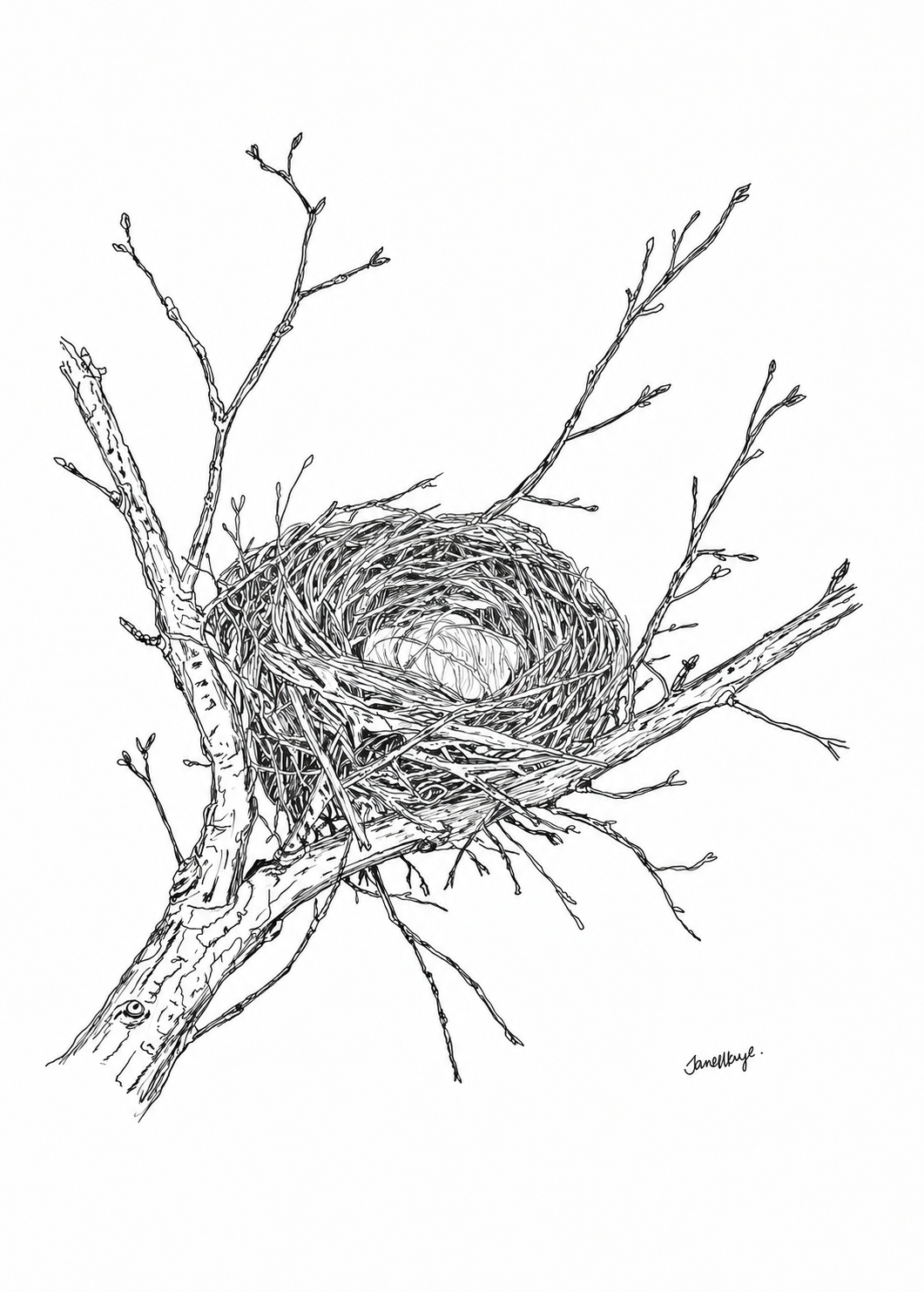
There is something strangely affecting about an empty bird’s nest, particularly when autumn has loosened the leaves from the branches and revealed what remained concealed throughout the summer, a small and intricate construction of twigs, grasses and fibres, suspended among the bare branches long after the birds that made it have gone. We may have passed beneath that tree countless times without knowing the nest was there, unaware of the journeys made to gather its materials, the patient work of arranging them, or the brief and vulnerable lives once sheltered within it, yet now, when the activity has ceased and the branches have grown still, the little structure draws our attention precisely because of what is no longer present.
I have been wondering why absence has this peculiar power to awaken our interest, how something that scarcely entered our awareness while it was part of the ordinary fabric of life can become unexpectedly significant when it disappears, as though familiarity had allowed us to overlook a presence whose importance becomes apparent only through the space it leaves behind. We notice the silence when a familiar birdsong is no longer heard, the altered shape of a garden when a tree has been removed, or the unfamiliar emptiness of a place where something once belonged, and sometimes it is only then that we begin to understand how quietly these presences had become woven into our experience of the world.
Yet I wonder whether absence truly reveals what was there all along, or whether it also changes the way we remember, allowing us to invest the vanished presence with meanings we might never have recognised while it remained familiar. The birds that occupied the nest were living their own lives, concerned with the immediate necessities of finding food, avoiding danger and raising their young, without any knowledge of the significance a stranger might one day attach to the place they had left behind, and perhaps there is something important in remembering that the nest was never created for our contemplation, nor does its emptiness necessarily represent a tragedy. For some of its former inhabitants, leaving may have been the natural continuation of life, the movement outwards into a world that extends far beyond the branches where their existence began.
Perhaps this is what makes an empty nest such a curious object of attention, for it reminds us not only of what has passed, but of how little we know about the lives unfolding around us, most of which continue beyond the boundaries of our observation and leave only occasional traces of their presence. We may become attached to the blackbird that visits the garden each morning, recognise the particular place where a robin sings, or notice the familiar movement of birds among the hedges, yet their lives are not contained within those brief encounters, and when they disappear from our view, we cannot always know whether something has ended or whether life has simply continued elsewhere.
There is a human tenderness in the meanings we attach to what remains, and I would not wish to diminish it, for the capacity to be moved by an empty place, a familiar sound no longer heard or the smallest evidence of a life once present belongs to our ability to form attachments and recognise significance beyond ourselves. Yet perhaps attention asks something more of us than remembering what has disappeared, inviting us to consider the countless presences that remain around us now, unnoticed not because they are unimportant, but because they have become so familiar that we scarcely think to look.
I find myself returning to the nest, its delicate architecture exposed among the branches, and wondering whether the more profound invitation lies not in mourning the birds that have departed, but in recognising how much life took place there while nobody was watching, and how much continues to unfold beyond our knowledge even now. Perhaps, the next time we hear a bird calling from a hedge or notice some small movement in a familiar tree, we might allow ourselves to remain with it a little longer, not because we fear its disappearance, or wish to preserve the moment against the future, but because there is something quietly extraordinary about sharing the present with another life whose existence will never be fully known to us.
The nest remains among the branches, holding nothing now but the space once occupied by its inhabitants, yet somewhere beyond that empty little circle the world continues, and perhaps what absence most gently reveals is not simply what we have lost, but how much was happening around us while we believed there was nothing particular to notice.
After the Birds Have Gone
Original pen-and-ink artwork by Jane Maye
The illustration accompanying this reflection is available as a printable art download, reproduced from my original drawing on Bristol board.
A4 digital art print — £4.99
For personal use. No physical item will be posted.
.
Support Nature Speaks
Choose an amount
Or enter a custom amount
Nature Speaks will always be free to read. If something here has made you pause, look a little longer, or notice the living world differently, you can help support the time and care that goes into the writing.