People often tell me that I live in a beautiful place, and they are right, because the River Ceiriog, often described as the fastest-flowing river in Wales, runs through the valley and through my garden, wooded hills rise behind the houses, ravens call from the trees and a great copper beech towers over the back of my home, spreading its branches above the roof and over the room in which I sleep, so that on quiet mornings I can lie beneath its shifting light and feel that rare and almost wordless privilege of living close to something older, larger and less hurried than myself.
Yet beauty is often what a place gives to the passing eye, while living somewhere means receiving everything else as well: its winters and darkness, its inconveniences and dependencies, the sounds that wake us, the small uncertainties that accumulate over time and the fears that sometimes attach themselves, almost imperceptibly, to what we once loved without reservation. A photograph can hold the river in sunlight, but it cannot contain the sound of it growing louder after days of rain, when the water that ordinarily brings movement and life to the garden begins to remind me of its strength; nor can it show how the copper beech changes when the wind is strong, because the tree whose presence steadies me by day becomes, in the darkness, something immense moving above the bedroom, and I find myself listening to every gust, unable for a while to separate the beauty of the tree from the vulnerability of sleeping beneath it.
There are other things that remain outside the beautiful view: the sound of off-road vehicles breaking across hills that appear to promise silence, the encounters that make walking the land feel less free and welcoming than it seems on a map, the power cuts that remind us how quickly the ordinary assurances of modern life can disappear, and the dependence upon oil, electricity and rural infrastructure for warmth and hot water. The log burner in the house and the fire pit in the garden possess their own deep pleasures, and there are evenings when carrying wood, tending a flame and watching sparks rise into the dark seem to restore something elemental that modern life has nearly forgotten, yet there is a profound difference between lighting a fire because we wish to feel closer to an older way of living and lighting one because the systems upon which the household depends are no longer dependable. What appears from a distance to be simplicity can, when lived through winter, reveal itself as vulnerability.
None of this makes the river less beautiful, the copper beech less magnificent or the valley less deserving of love, but perhaps we sometimes confuse loving a place with being able to remain there, as though recognising that it no longer sustains us were an act of ingratitude, or as though leaving would mean that the beauty had somehow failed. A place may give us something essential for a period of our lives and still become somewhere from which we must eventually move on; we may belong to a landscape deeply and yet discover that belonging is not the same as flourishing, because the self that is nourished by rivers, trees and solitude is not the only self we are responsible for keeping alive.
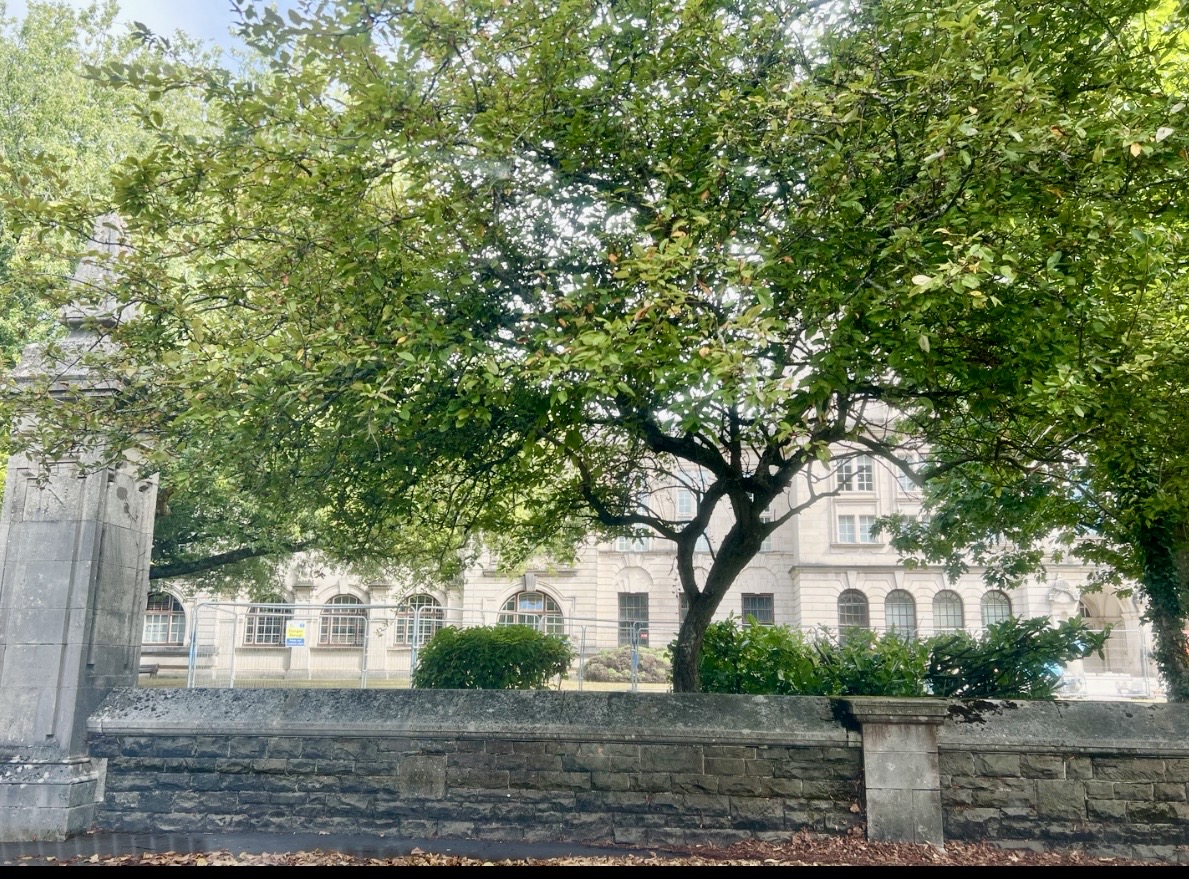
During the past week I have spent time in Cardiff, and although the greatest pleasure was being with my daughter, I found myself unexpectedly nourished by the ease with which other things entered the day: an hour snatched in the museum, a painting encountered without weeks of planning, the carved figures and statues watching from the wonderful old buildings, a patch of green among the streets, then coffee in a café and conversation allowed to wander beyond the immediate and practical into ideas, memories and possibilities. None of these experiences was dramatic, yet together they awakened something that I had not realised had grown quiet within me, and I began to understand that culture is not merely entertainment added to a life once its real needs have been met, but one of the ways in which human beings reach across time and solitude towards one another, leaving behind paintings, buildings, stories and thoughts so that another mind, perhaps centuries later, might feel less enclosed within itself.
In The Earth Has a Soul, Meredith Sabini brings together Jung’s reflections on nature, technology and modern life, but it was a sentence of her own that remained with me, although until now I had remembered the feeling of it more clearly than the words: “Eventually, I dreamed of having a home that faced nature on one side and culture on the other, in balance and accessible.” She writes of this dream as part of her ecological recovery, shaped by Jung, whom she describes as a mentor who left a map for the venture, and perhaps that is why the sentence feels so different from a lifestyle preference or a simple choice between town and country; it speaks instead of recovering a balance within the self, of needing the living earth close enough to keep us rooted while also needing art, history, thought and conversation close enough to prevent another essential part of us from growing hungry.
Perhaps we are too often asked to choose between two incomplete stories, one in which the countryside is pure, peaceful and restorative and another in which the city is stimulating, connected and alive, when both landscapes contain gifts and losses that cannot be understood by someone merely passing through. Nature can steady us, enlarge us and return us to ourselves, but it can also isolate and frighten us; culture can overwhelm us with noise and haste, but it can also offer the painting that changes the way we see, the building that allows us to feel the presence of those who lived before us, and the conversation over coffee that opens a door in the mind we had forgotten was there.
My enjoyment of Cardiff does not mean that I have ceased to love the river, the hills, the ravens or the copper beech, and it does not mean that I want to exchange them for traffic, noise and pavements, because I know that I would soon begin to long for the quiet presence of the more-than-human world. Perhaps it means only that I am beginning to understand more honestly what I need, which is not nature instead of culture or culture instead of nature, but a place where I can turn towards either, where the hills are near enough to enter on foot and art, history, cafés and thoughtful conversation are near enough to belong to an ordinary afternoon.
We speak often about finding the place where we belong, as though somewhere there must be one landscape capable of answering every need forever, but perhaps belonging is something more fluid and attentive than that, requiring us to notice not only what a place gives us, but what it quietly asks us to go without. Perhaps the place that truly sustains us is not always the one that appears most beautiful when we arrive, but the one in which we no longer have to keep one part of ourselves alive by allowing another to disappear.
