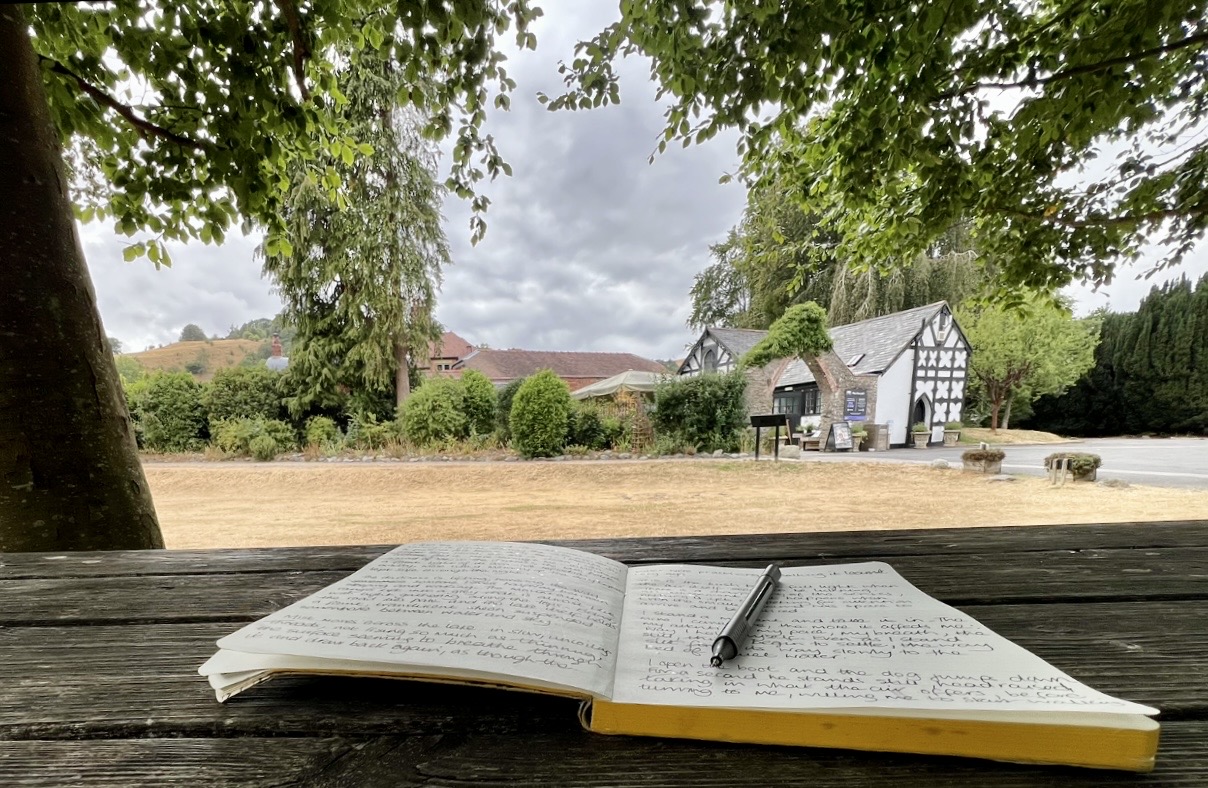
I have always preferred writing longhand, but especially outdoors. There is something about taking a notebook outside that changes the nature of the work. Indoors, it is easy to believe that writing comes entirely from the mind — that if I sit still enough, think hard enough, and arrange the right words, the page will eventually yield. Outside, that illusion is harder to keep up. The world is always entering the sentence.
A leaf turns over in the wind. A bird calls from somewhere beyond the boundary of sight. Light moves across the page, insects investigate the margins, and a sudden breath of air lifts the corner of the paper just as a thought begins to form. None of it necessarily becomes part of what I’m writing — but it changes the rhythm of the writing all the same.
Much of my book, Abyssus, was written this way. It takes place beside a lake over the course of a single day, and although the hard editing eventually happens at a computer, I often need to step away from the screen before I can hear what a passage is trying to become.
Writing by hand slows thought to the pace of the moving pen. There is no effortless deleting, no jumping ahead to repair a sentence before it has revealed where it’s going. The words arrive with their crossings-out and hesitations still attached. The page becomes not just a record of thought, but evidence of attention.
Perhaps that’s why writing outdoors feels different. I’m not standing apart from the world, describing it. For a little while, I’m writing from inside it.
And sometimes the sentence I couldn’t find indoors arrives quietly beneath a tree.