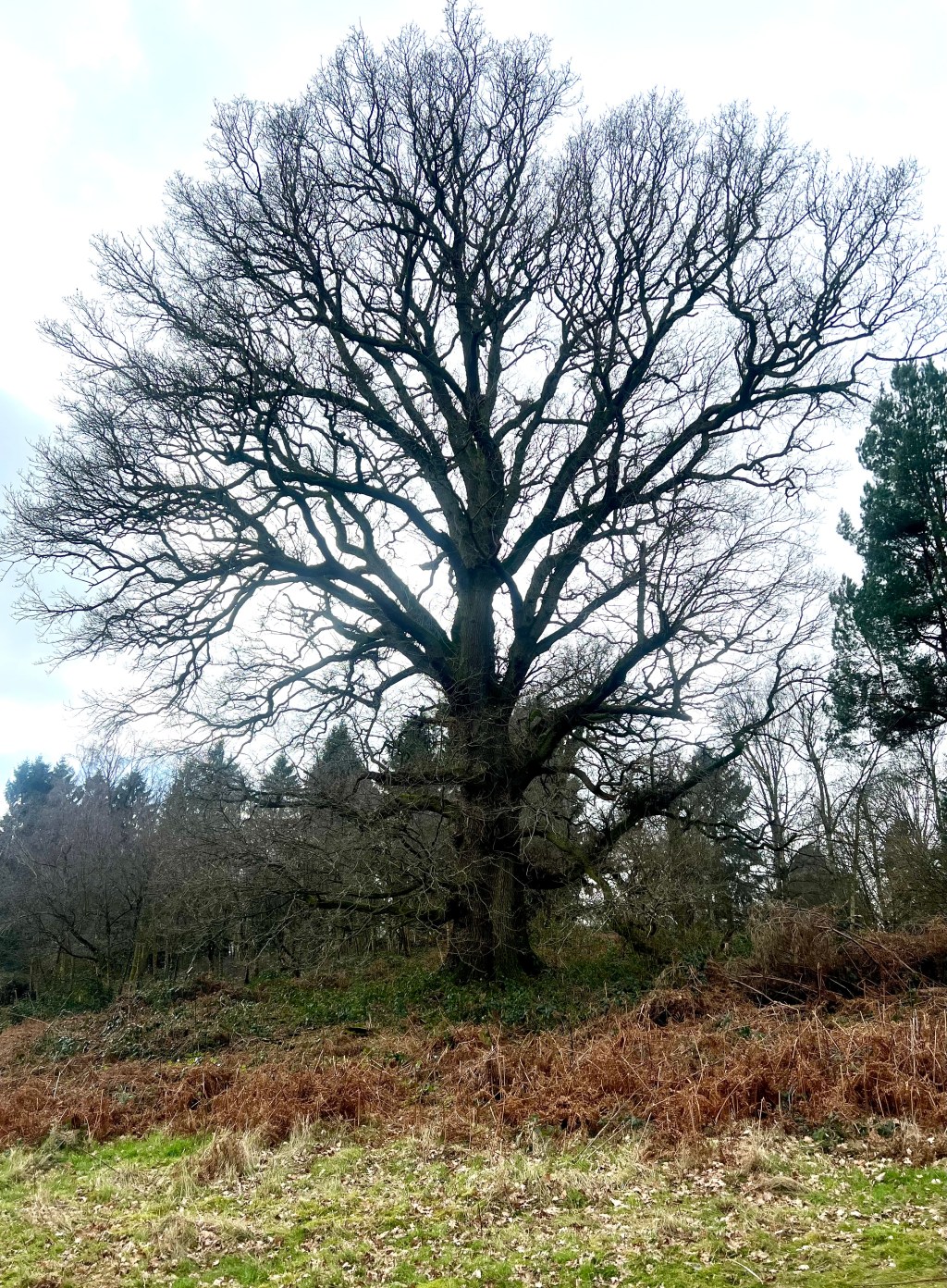
Standing beneath this oak, I notice how quickly the mind wants to move ahead of what is in front of it. It names the tree, traces the reach of its branches against the sky, admires the spread of shadow across the grass, and then almost imperceptibly begins to drift elsewhere. The body remains, but attention has already leaned forward.
If I stay, truly stay, something different begins to happen.
The breath steadies. The eyes cease searching and begin resting. Bark becomes not texture to appraise but surface to dwell with. Light gathers in its fissures and slips away again. A faint stirring in the undergrowth resolves slowly into life rather than interruption. Nothing remarkable occurs, yet the moment deepens when it is not hurried.
There are ways of paying attention that reach before experience has fully opened, preparing conclusions in advance. This reaching feels efficient, even intelligent. And yet it thins what it touches.
There are other ways of paying attention that do not advance but remain.
When attention rests in this way, the oak ceases to be an object observed and becomes something more reciprocal. I am no longer simply looking at it. I am standing within its field. Its scale alters my sense of time. Its stillness adjusts my breathing. Its age places my concerns in proportion. The encounter is not one-sided. Something in me is rearranged by its presence.
What first seemed singular begins to suggest layers. Rings laid down in silence across decades. Roots extending through dark soil beyond sight. Fine fungal threads weaving unseen alliances beneath the woodland floor. The visible form is only the briefest expression of something older and more interwoven than it appears. The tree stands at the meeting point of light and darkness, crown lifted toward the sky while its hidden half enters depths we will never see. It holds ascent and descent at once, and in doing so unsettles the neat division between what has been and what is becoming. Time does not feel linear here. The present moment seems to touch every ring at once.
Attention is like this.
When it does not reach prematurely for meaning, it begins to receive what is already here. What looked self-contained reveals relationship. What seemed finished opens into continuity. Beneath bark, beneath soil, beneath the surface of any meeting, whether with land or with another person, slower processes are shaping what becomes visible.
This is not passivity but restraint, a willingness to remain long enough for what is other than ourselves to remain fully itself. In remaining, attention becomes less a spotlight we shine and more a space in which something shared can occur.
In a culture that trains us to move quickly, to respond instantly, to reach before we have truly met what stands before us, this stillness can feel unfamiliar. And yet it is simply a return to proportion, to the scale at which trees grow, seasons turn, and relationships deepen without announcement.
From such remaining, care arises naturally, not as rule or effort but as recognition. We begin to sense that we are not separate observers but participants in a wider continuity of life, one that exceeds our glance and outlasts our urgency.
There is more here than we first see.
More in the grain of bark than surface can show.
More in the exchange between root and soil than the eye can follow.
More in ourselves than the hurried surface of thought reveals.
We do not have to manufacture this depth. We have only to stand still long enough for it to disclose itself.
There are ways of paying attention that do not reach, and in not reaching are met.
 Nature Speaks
Leave a comment