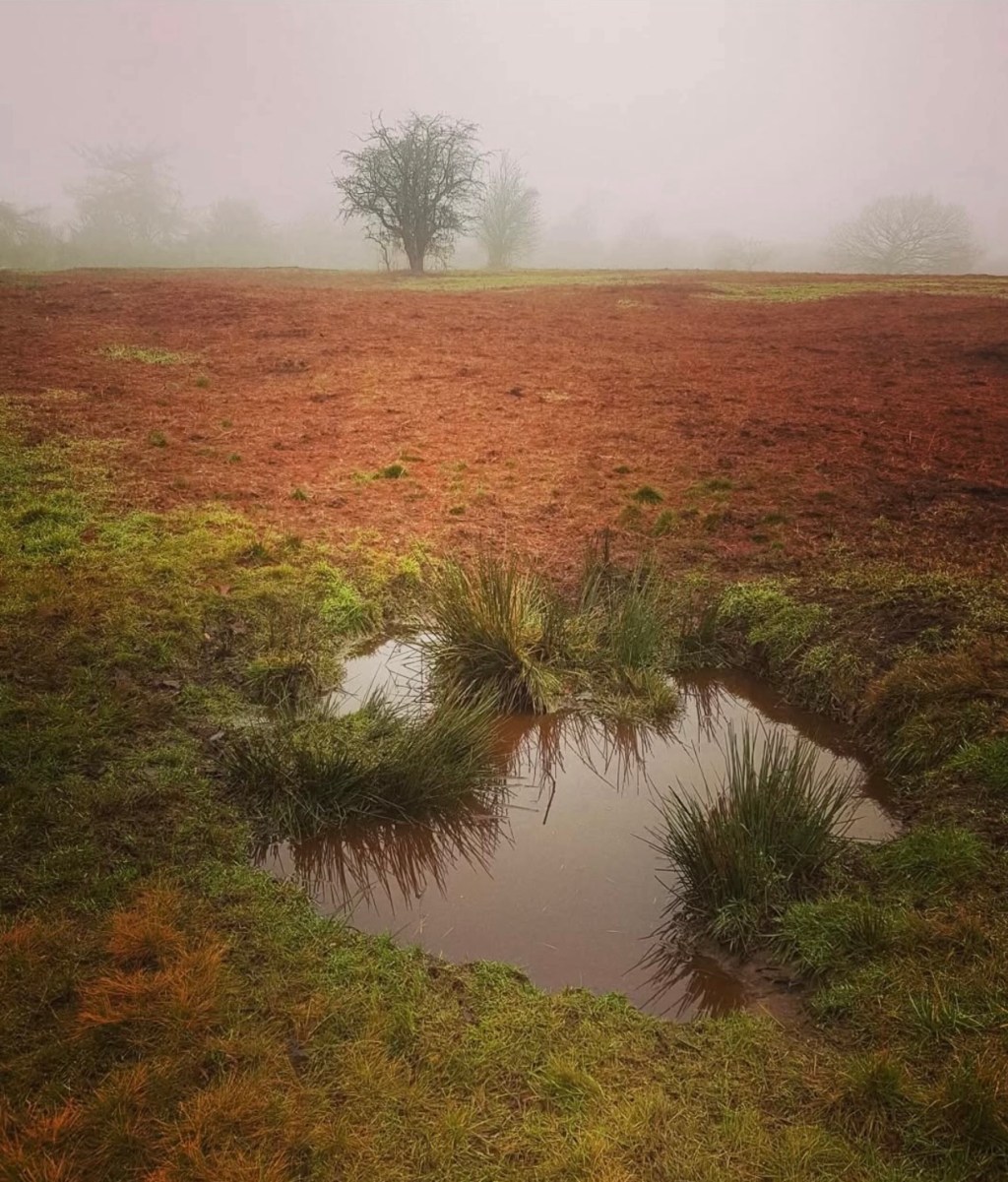
There are losses that arrive with noise, losses that feel like a door slamming shut, losses that shock us into recognition because they happen suddenly enough to be undeniable, and then there are other losses, perhaps the more dangerous kind, that arrive quietly and gradually, losses that do not disturb our routines, that do not interrupt our days, and that do not even feel like losses at first, because they slip into the fabric of life so gently that we adapt before we have time to grieve.
It is easy to speak of ecological loss in terms of species, habitats, numbers, and statistics, and of course these matter, because the living world is under immense pressure, but I find myself wondering more and more if there is another kind of loss happening alongside it, one that is harder to measure, harder to quantify, and yet deeply intimate, because it is not only nature that is disappearing, it is also our experience of nature, our ordinary daily contact with it, our familiarity with its rhythms, its small presences, its quiet details, and perhaps this is why the phrase “the extinction of experience” feels so unsettling, because it points toward something psychological as much as ecological, something that happens not only to landscapes but to the human mind.
Because nature can remain present around us while vanishing from our attention, and when something vanishes from attention it begins, slowly, to vanish from the heart.
This is the strange truth: that we can live beside trees without really seeing them, that we can move through seasons without noticing their subtle turning points, that we can walk under birdsong without hearing it, that we can pass a hedgerow alive with small movements and never once allow our gaze to rest long enough for recognition to happen, and this does not make us bad people, it does not make us uncaring, it simply reveals something about the world we are living in, a world that trains attention toward speed, abstraction, and constant interruption, a world that teaches the mind to jump from one thing to the next without ever settling, without ever resting, without ever allowing relationship to form.
And yet attention is not neutral.
Attention is not just a mental spotlight we direct at will, it is a form of relationship, and what we repeatedly attend to becomes what we come to value, and what we value becomes what we feel responsible for, which means that when attention is pulled away from the living world, something essential begins to thin, not only in our knowledge but in our care, because it is difficult to protect what you rarely meet, and difficult to love what you barely notice.
Perhaps this is why disconnection feels so quietly dangerous, because it creates a loop that strengthens over time, in which the less nature we experience, the less connected we feel, and the less connected we feel, the less we are inclined to protect what remains, and so nature shrinks further, and experience shrinks with it, and the cycle tightens, not through cruelty or malice, but through absence, through forgetting, through the slow erosion of attention.
And the most unsettling part is that this forgetting does not stop with one generation.
Because children do not only inherit landscapes, they inherit what their parents notice.
They inherit the invisible direction of adult attention, the things adults pause for, the things adults name, the things adults treat as significant, and they also inherit the things adults ignore, the things adults treat as background, the things adults rush past without a glance, and so the loss becomes cultural, almost invisible, woven into the ordinary texture of life, until it feels normal for a child to grow up without knowing the names of birds, without knowing the smell of rain on soil, without recognising the quiet intelligence of a tree in leaf, without ever forming the kind of intimacy with the natural world that once arrived effortlessly through daily living.
This is why it seems increasingly clear that the ecological crisis is also an attentional crisis, because the modern world does not only reduce biodiversity in the land, it reduces biodiversity in the mind, narrowing our perception until the living world becomes scenery rather than presence, background rather than relationship, something we “visit” occasionally rather than something we belong to.
And perhaps this is why so many people feel a particular kind of restlessness now, a fatigue that is not only physical but existential, because the mind becomes trapped inside itself, constantly producing thoughts, constantly monitoring, planning, worrying, narrating, circling around the self like a bird that cannot land, and the more inward attention becomes, the more the world begins to feel distant, the more life begins to feel abstract, the more we begin to feel strangely alone, even when surrounded by people, even when surrounded by comfort, because we have lost contact with something wider than our personal story.
In such a world, nature becomes not simply beautiful, but restorative in the deepest sense, because nature offers the mind a different rhythm, a different texture of experience, something that does not demand constant reaction, something that does not ask for productivity, something that does not reward speed, and when we step into that rhythm, even briefly, we begin to remember what attention is meant to feel like.
At first, of course, we bring our usual mind with us, the busy mind, the scrolling mind, the planning mind, and we walk beneath trees while still thinking about tomorrow, we stand by water while still replaying yesterday, we look at the sky while the mind remains indoors, and yet nature does not punish us for this, nature is patient, and it continues offering itself in small ways, the movement of leaves, the call of a bird, the shimmer of light on water, the smell of damp earth, and slowly attention begins to catch.
Not through force.
Not through effort.
But through invitation.
And when attention catches, something inside us loosens, because the nervous system recognises, perhaps with relief, that it does not need to remain clenched, that it can widen, that it can soften, that it can rest inside the world rather than inside thought.
This is the quiet miracle: that the mind does not need to be conquered, it only needs to be redirected, gently, toward something living, something real, something outside the endless inner narration, and nature provides this endlessly, not in dramatic revelations, but in small ordinary moments, a leaf turning in the wind, a ripple moving across a pond, the sudden lift of a bird from grass, and in these moments we are returned to ourselves, not the anxious self that performs and worries and strives, but the older self that knows how to belong.
Perhaps this is why the simplest act is also the most radical, because the reversal does not begin with grand gestures, it begins with attention.
It begins with looking.
With pausing long enough for the world to become vivid again.
With allowing one small living detail to enter us fully, to hold us for a moment, to remind us that life is not only inside the mind, that reality is larger, slower, more patient, and more beautiful than our thoughts.
And if attention is the beginning of care, then perhaps restoring attention is one of the most important forms of restoration we have, because when attention returns, tenderness returns, and when tenderness returns, responsibility begins to feel natural rather than forced, because it becomes harder to harm what you have truly met.
The world is still here.
The living world has not stopped offering itself.
It is still speaking in leaf and light and birdsong and water.
The question is simply whether we are still able to listen.
A Nature Speaks Practice: Re-Widening the Gaze
And perhaps now, rather than reading further, you might pause for a moment and let your own attention test this for itself, gently, without effort, the way we test water with a fingertip.
If you would like to feel what this means, not as a concept but as an experience, you can try something very small, something that does not require a forest or a mountain, something that can be done anywhere there is even the faintest trace of the living world, a tree at the edge of a street, a weed between paving stones, a patch of moss on a wall, a bird on a rooftop, a thin strip of sky.
Begin by stepping outside, not with the intention of improving yourself, not with the intention of calming down, not with the intention of doing mindfulness correctly, but simply stepping outside as you are, with the mind exactly as it is, busy or tired or distracted or restless, because the mind does not need to be fixed before you begin.
Stand still for a moment, and allow your body to arrive.
You may notice at first that your attention is still inward, still tangled in thought, still carrying the weight of your day, and this is natural, because attention has been trained to live inside screens, tasks, and worries, and it does not widen again instantly.
So do not rush it.
Instead, soften your eyes.
Let your gaze become less sharp, less searching, less like a hunter and more like a listener, as if you are allowing the world to come toward you rather than trying to seize it.
Then choose one small detail of nature, something ordinary, something you might usually ignore, and give it your attention as if it is enough, as if it is the only thing you have to do for the next minute.
It might be the shape of a leaf.
The way a branch divides and divides again, like a thought made visible.
The movement of grass in wind.
The subtle shimmer of light on water.
The sound of birdsong arriving and dissolving into silence.
Stay with this one detail, and allow yourself to become curious about it, not intellectually, not with questions you need to answer, but with the simple curiosity of presence, the kind of curiosity that says, I am here, and I am looking, and I have time.
And as you do this, you will notice the mind pulling away, because the mind is restless, because it will offer you lists and memories and plans, because it will try to reclaim you, and each time you notice this happening you can return gently to the small detail you chose, without frustration, without judgement, returning the way you might return to a quiet conversation after being briefly distracted.
After a minute or two, widen your attention slightly and allow a second detail to enter, perhaps a sound, perhaps a scent, perhaps the feel of air on skin, perhaps the movement of shadow, and notice what happens inside you when attention begins to widen, not necessarily peace, not necessarily happiness, but something subtler: a loosening, a softening, a sense that the world is larger than your thoughts, and that you do not have to carry everything alone.
Finally, before you turn back indoors, place a hand lightly on your chest or your stomach and take one slower breath, not forcing it, simply allowing the breath to deepen naturally, and let yourself recognise that you have just done something quietly important.
You have not solved your life.
You have not completed a task.
You have not achieved a perfect state.
And yet you have restored something essential.
You have practised attention as relationship.
You have offered your gaze back to the living world.
And the living world, patiently, has received it.
Closing Reflection
Perhaps this is why the work emerging around nature connectedness feels so quietly urgent, because it suggests that the great crisis is not only happening in forests, rivers, and oceans, but also in the human capacity to experience them, as if the modern world is not only eroding ecosystems but eroding the very attention through which relationship is formed, and if attention is the beginning of care, then restoring attention may be one of the most important forms of restoration we have, not dramatic, not heroic, but simple and daily, like stepping outside and letting the living world reach us again, until the extinction of experience begins, gently, to reverse itself.
For this reason, I have written a second companion reflection, not to add more ideas, but to offer a simple practice for widening the gaze again, and letting the living world return.
→ Part II: Letting the World Return: A Practice for Restoring Wild Attention
(A gentle Nature Speaks practice for stepping out of thought and back into the real.)
You do not need a perfect place, only a few minutes and the willingness to notice what is already there.
If you’d like to linger, you’ll find more reflections like this throughout Nature Speaks, where attention becomes a path back to the living world.
 Nature Speaks
Leave a comment