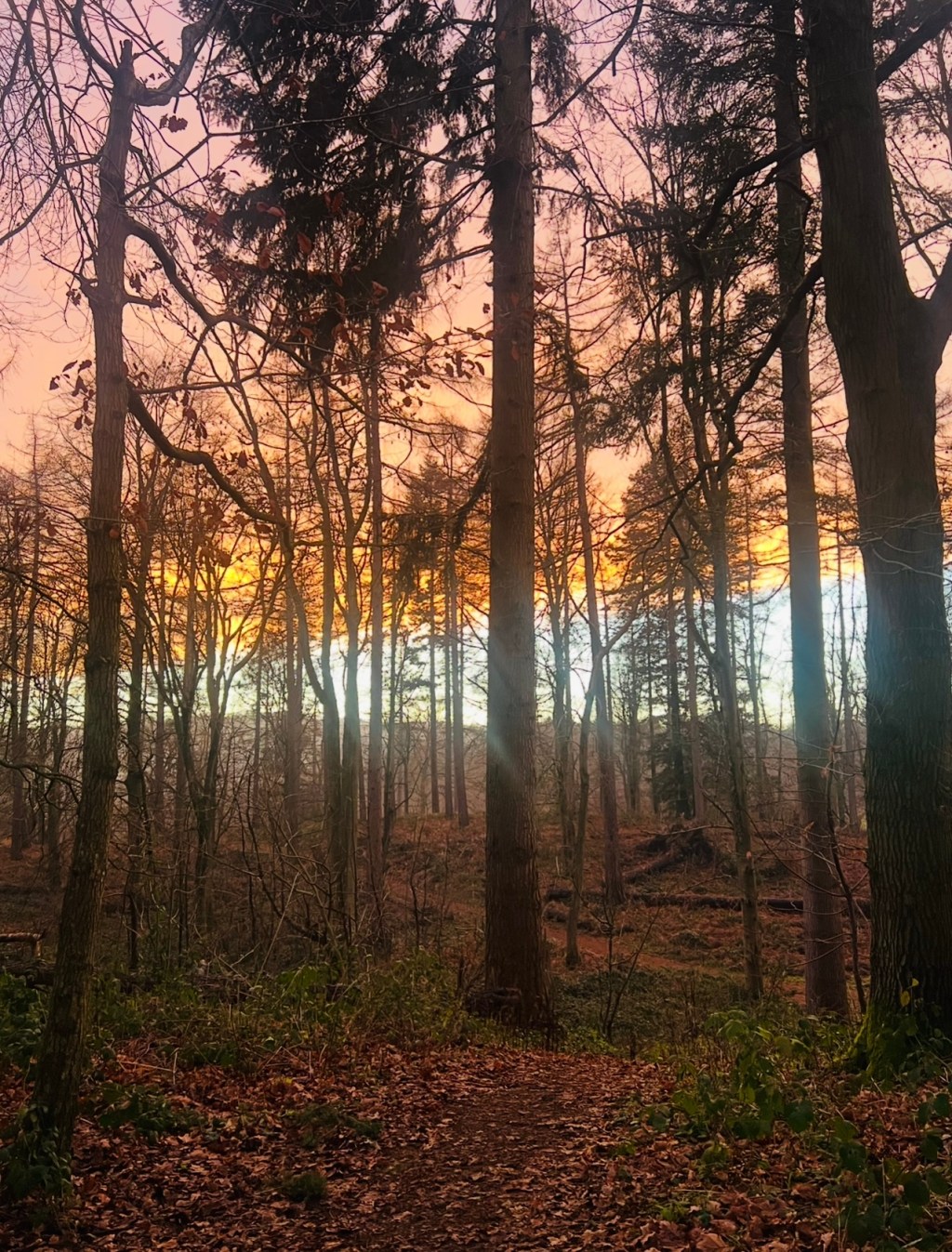
(Nature Speaks, Part II)
In the previous reflection, The Extinction of Attention, I wrote about how easily the living world can fade from our lives, not because it has disappeared, but because our minds have become too hurried, too crowded, too trained toward abstraction to meet it fully. We continue to move through landscapes, yet often without truly arriving in them, walking beneath trees while thinking about tomorrow, passing birdsong as if it were background noise, living beside the seasons without feeling their subtle turning, as though the world is still flowering and shifting, but we are no longer inside its rhythm.
And yet this loss is not permanent.
It is not a door that has closed forever.
It is more like a muscle that has been neglected, or a language that has gone unused, because attention is not something we either possess or lack, it is something we practise, something we train, something we can restore gently, through small acts of noticing, through moments of stillness, through the quiet willingness to let one living detail hold us long enough for the mind to soften and the world to become vivid again.
This is what this reflection is for, not as a solution, not as a technique, not as another demand placed upon an already busy life, but as a simple invitation: to step outside, to pause, and to let the world return.
Because the world does return, when we give it the chance.
It is patient, and it does not blame us for being distracted, it does not punish us for our absence, it does not insist that we arrive in the perfect state of calm or gratitude. It simply continues, as it has always continued, offering itself in leaf and light and birdsong and water, waiting for our attention the way a friend waits at the edge of a room, not demanding, not forcing, only hoping we will look up.
There is something important to understand about the mind, something that becomes clearer the moment we begin to observe it honestly, and that is that the mind does not like emptiness and does not like silence. It fills space automatically, producing thoughts the way trees produce leaves, and so even when we step outside into nature, even when we stand beneath open sky, we often bring the entire inner world with us, the lists, the worries, the unfinished conversations, the restless planning, the sense that we should be doing something else, as though we are carrying the mind like a suitcase that cannot be put down.
And so we can be surrounded by green and still feel absent, walking through a landscape while the mind remains indoors, sitting beside water while attention is scrolling through the future, looking at the sky while still rehearsing yesterday.
This is not failure.
It is simply the modern condition.
The world we live in trains attention to be narrow and quick and constantly pulled away, and after years of this training the mind forgets how to settle into what is simple and real, not because it cannot, but because it has not been asked to for a long time. Attention becomes something we spend rather than something we inhabit, and so we become tired, not only tired from work and responsibility, but tired from this constant fragmentation, tired from living in a state of perpetual inner movement.
So if you find it difficult to be present, it does not mean you are doing something wrong, it simply means you are human, and perhaps what we need is not discipline, not force, not harsh self-correction, but gentleness, a slow retraining, a quiet return.
Nature does not demand our attention.
It invites it.
And this is why nature can feel so different from the world of screens, where attention is taken, captured, fragmented, pulled into urgency, because nature does not operate through urgency, it operates through rhythm, through repetition, through subtle variation, through patterns that do not need to convince us of their value. A tree does not perform. A bird does not persuade. Water does not hurry.
And because nature is not asking anything of us, we begin, slowly, to feel what it is like to stop asking so much of ourselves, and the nervous system responds in the way it always responds to safety, by loosening, by widening, by breathing more deeply without being told. We begin to remember that attention can be soft, that it can be spacious, that it can be something we rest inside rather than something we tighten into.
Perhaps this is why nature connectedness is not simply about being outdoors, but about how we meet the outdoors, because nature does not heal us through proximity alone, it heals us through relationship, and relationship begins in attention, in the simple act of noticing, in the simple act of staying, in the simple act of letting one detail become real.
So often we imagine that presence must be dramatic, a kind of revelation, a sudden clearing of the mind, but presence is rarely like that. Presence is quiet. Presence is almost humble. It arrives in small returns, in small moments when attention catches, the way dawn arrives, not suddenly, but gradually, until one day you realise the darkness has lifted.
And perhaps this is why the most important practice is not the practice of controlling the mind, but the practice of returning, returning again and again, returning gently, returning without judgement, because the mind will always wander, and the wandering is not the problem. The problem is when we do not return.
So here is a small practice, one that can be done anywhere there is even the faintest trace of the living world, because nature does not require perfection from us, it only requires presence.
And perhaps now, rather than reading further, you might pause for a moment and let your own attention test this for itself, gently, without effort, the way we test water with a fingertip.
Step outside.
Do not try to calm down, do not try to meditate, do not try to make the mind quiet, simply step outside as you are, with the mind exactly as it is, busy or tired or distracted or restless, because the mind does not need to be fixed before you begin.
Stand still for a moment and allow your body to arrive, because so often the body arrives before the mind does, and it helps to give it time.
Then soften your eyes, letting your gaze become less sharp, less searching, less like a hunter and more like a listener, as if you are allowing the world to come toward you rather than trying to seize it.
Now choose one small detail of nature, something ordinary, something you might usually ignore, and give it your attention as if it is enough, as if it is the only thing you have to do for the next minute. It might be the shape of a leaf, the way a branch divides and divides again, the movement of grass in wind, the shimmer of light on water, the sound of birdsong arriving and dissolving into silence.
Stay with this one detail, and allow yourself to become curious about it, not intellectually, not with questions you need to answer, but with the simple curiosity of presence, the kind of curiosity that says, quietly, I am here, and I am looking, and I have time.
And as you do this, you will notice the mind pulling away, because the mind is restless, and it will offer you lists and memories and plans, and it will try to reclaim you. Each time you notice this happening, you can return gently to the small detail you chose, without frustration, without judgement, returning the way you might return to a quiet conversation after being briefly distracted.
After a minute or two, widen your attention slightly and allow a second detail to enter, perhaps a sound, perhaps a scent, perhaps the feel of air on skin, perhaps the movement of shadow, and notice what happens inside you when attention begins to widen, not necessarily peace, not necessarily happiness, but something subtler: a loosening, a softening, a sense that the world is larger than your thoughts, and that you do not have to carry everything alone.
Finally, before you turn back indoors, place a hand lightly on your chest or your stomach and take one slower breath, not forcing it, simply allowing the breath to deepen naturally, and let yourself recognise that you have just done something quietly important.
You have not solved your life.
You have not completed a task.
You have not achieved a perfect state.
And yet you have restored something essential, because you have practised attention as relationship, you have offered your gaze back to the living world, and the living world, patiently, has received it.
This practice may seem too small, too gentle, too ordinary to matter, but attention is always built this way, not through grand gestures but through repetition, through returning again and again, because the mind will always wander, and presence is not the absence of wandering, it is the willingness to come back.
And each time you come back, something strengthens. A thread forms. A relationship deepens. A sense of belonging begins to reappear, not as a belief, not as an idea, but as a bodily experience, as though something in you recognises itself again, something older than thought, something that remembers what it means to be part of a living world.
Perhaps this is how the extinction of experience begins to reverse itself, not through force, not through perfection, but through the quiet persistence of noticing, through the repeated act of letting the world enter you again, one small detail at a time, until attention becomes a habitat once more.
Perhaps the world has never truly stopped offering itself. Perhaps the trees have been waiting all along. Perhaps birdsong has been calling across the years, even when we were too busy to hear it. Perhaps water has been moving in its ancient way, patient and untroubled, whether we noticed it or not.
And perhaps the real work now is not to chase after a better life, but to return to the life that is already here.
Because attention is not simply a mental act.
Attention is an act of belonging.
And the more we belong, the more we care, and the more we care, the more we protect, and the more we protect, the more the living world can continue.
So we step outside, and we soften the eyes, and we let the mind chatter, because it will, and we notice one small living thing long enough for the world to become vivid again, and in that moment, quietly, we remember.
If you missed Part I
If you haven’t yet read Part I of this series, you can find it here:
→ Part I: The Extinction of Attention: Why We Are Losing the World Without Realising It
If something in this reflection touched you, you might like to stay a little longer here. Nature Speaks is a space for remembering what the living world gives us, not as information, but as experience, and for exploring the quiet way attention can become a bridge back to ourselves.
 Nature Speaks
Leave a comment