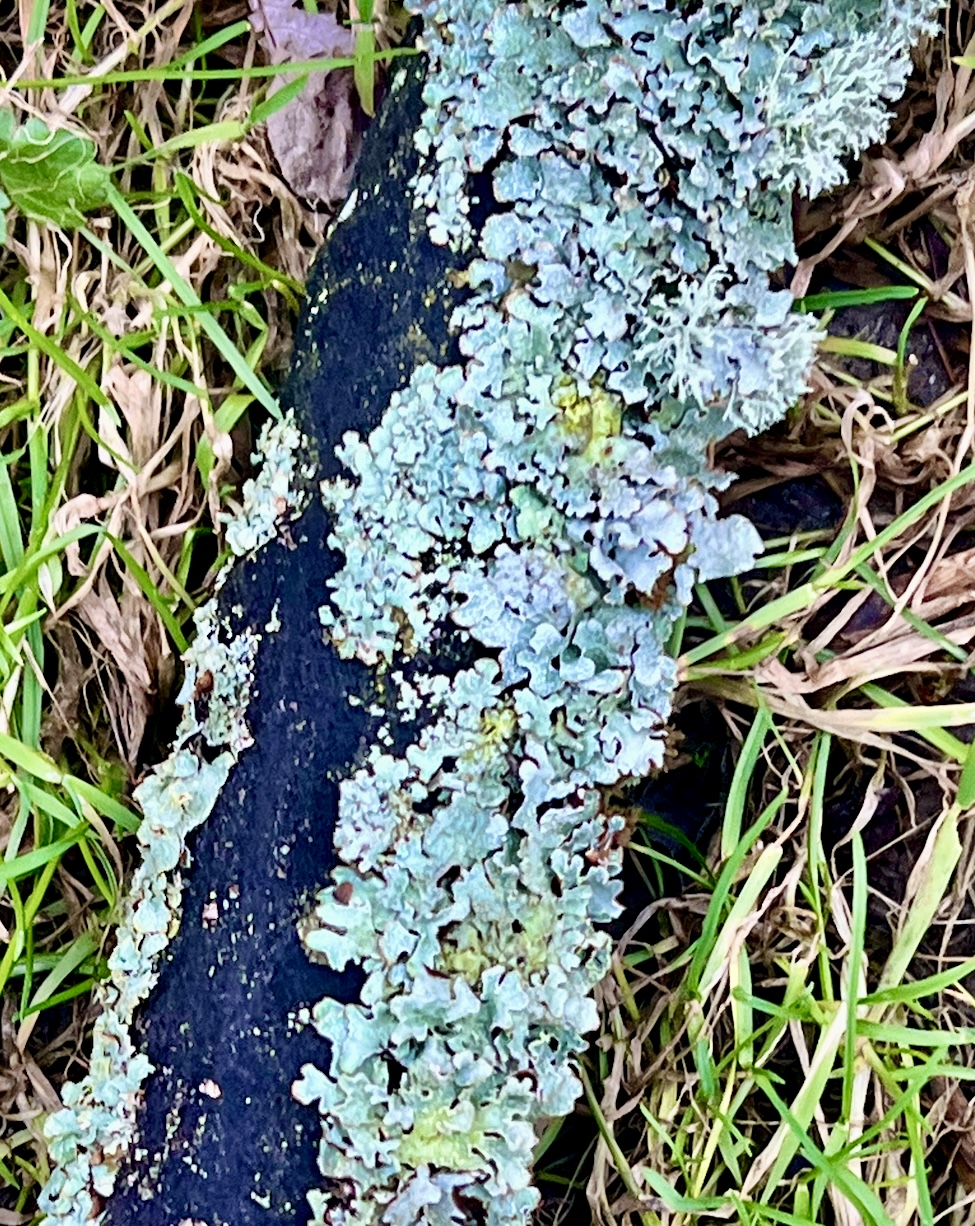
What draws the eye first is the pale green of the lichen, a kind of quiet frost resting on the length of a fallen branch. At a distance this surface seems static, almost decorative, the sort of texture that blends into the rest of the winter ground without asking to be seen. But if we linger and look a little more closely, we begin to notice the subtle persistence of what is growing here: each lichen a slow colony of two lives held together, algae and fungus sharing work, sharing shelter, sharing the delicate labour of remaining alive on bark that no longer feeds them.
The branch itself is dark, water-soaked, beginning its long return to soil. If we listen to what time is doing here, we might sense that it is in no hurry. Nothing dramatic is underway, and yet transformation never stops. The lichen holds on with patient tenacity, taking what light it can, turning it into energy, turning energy into continuation. It survives through cooperation rather than force. We can almost imagine the decades of quiet agreements taking place at a scale we rarely attend to.
When we walk past such things, we often think we are seeing endpoints – a fallen branch, a patch of growth, a sign of decay – but what we are looking at is a moment within a long conversation between elements. The wood once held leaves; the leaves once held sunlight; the sunlight once warmed air now chilled by winter; and through all of it life rearranges itself, joining and separating, holding fast and letting go, forming communities we only notice when we choose to pause.
There is something calming in recognising that the world is not made solely of motion and noise and ambition. Some lives proceed slowly, shaping themselves grain by grain, cell by cell, through seasons that we rush past. When our days feel hurried or crowded, when thoughts push forward without rest, scenes like this remind us that attention is not a luxury but a way of staying connected to what continues without us and yet includes us.
We need not name every detail to appreciate it. We need not interpret to feel the presence of life continuing. Sometimes it is enough to kneel, to look, to let our breath match the stillness that is not truly still. The world speaks quietly to those who let themselves listen, and in lichen on a fallen branch we might learn again that resilience does not always announce itself loudly; it can simply remain.
Life goes on, moment by moment, and gently our awareness returns – to colour, to texture, to breath – and perhaps to the small patience we had forgotten we possessed.
The wild remembers. So do you.
 Nature Speaks
Leave a comment