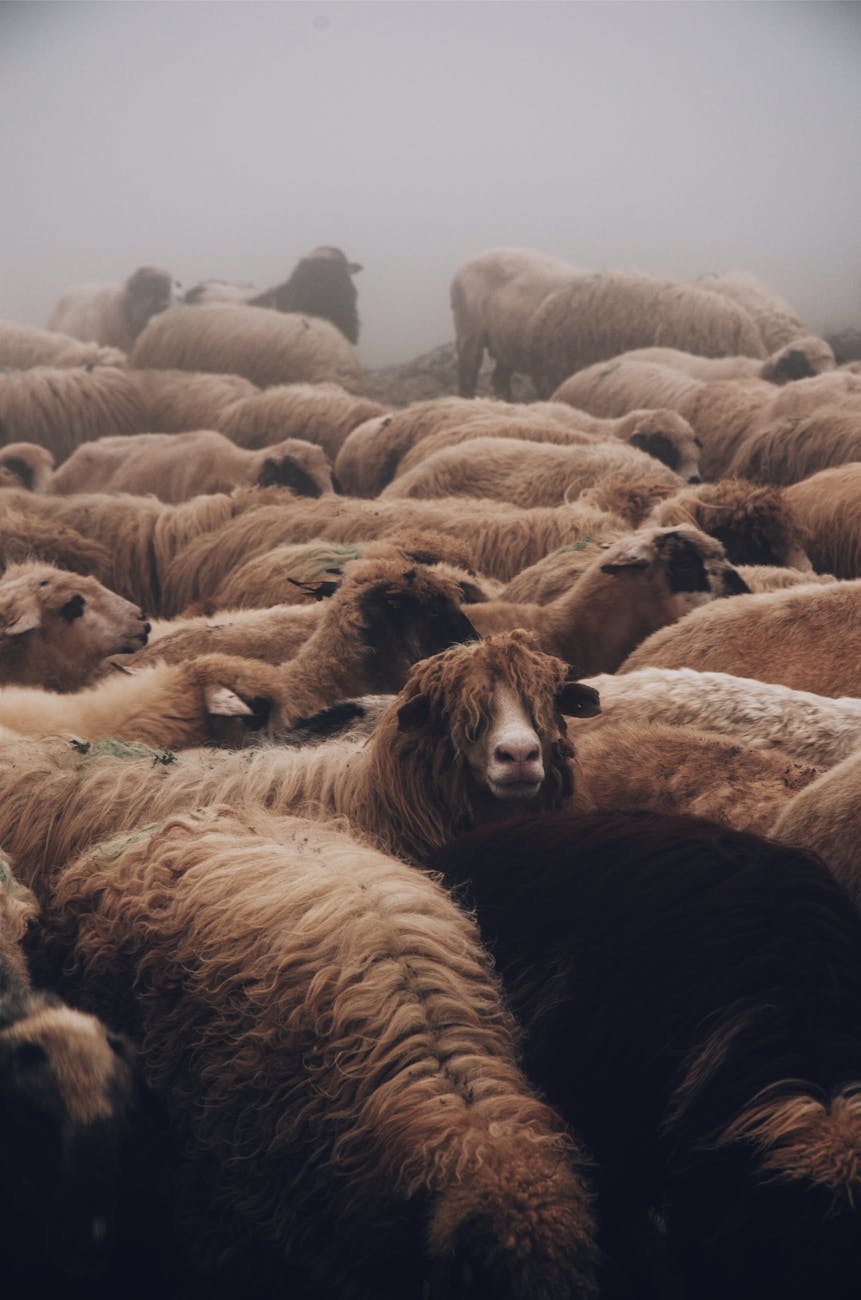
One afternoon I watched a group of teenage boys moving down the High Street. They walked together as if held by an invisible thread. Their hair, their clothes, even the rhythm of their voices seemed the same. They slipped around shop signs and café tables without breaking formation.
For a moment, I no longer saw boys, but a herd. A small river of sameness flowing forward.
Carl Jung once described such a scene in words that echo through time:
“Grazing heads nodded, the herds moved forward like slow rivers. There was scarcely any sound save the melancholy cry of a bird of prey… I felt then as if I was the first man, the first creature to know that all of this is… Without that moment it never would have been. All nature seeks this goal and finds its fulfilment in man but only the most highly developed and fully conscious man.”
Jung suggests something profound: when we awaken to the world, the world itself awakens with us. And yet… how often we resist awakening. How often we slip back into the comfort of sameness.
Why is it so frightening to stand out?
For many years, I knew that fear intimately. A chronic lack of confidence made me shrink from attention, hide from exposure. At times, the thought of being different felt more unbearable than death itself.
This may sound irrational – but in truth it is very old. Deep inside us, older than memory.
For most of our history, we lived in danger: lions, wolves, hunger. Alone, we were vulnerable. Together, we survived. The group warned, defended, shared food. The group was life. To be cast out was to be left beyond the firelight, alone with the night. It was not a metaphorical death, but a real one.
That truth still lives in our bodies. It explains why rejection hurts so much more than embarrassment. Why standing on a stage can feel like facing predators. Our heartbeat races, our chest tightens – not because we will die, but because once, long ago, we would have.
Even today, the pattern continues. Herds move in crowds, and those who step aside are noticed, sometimes attacked – not by claws and teeth, but by gossip, ridicule, or trolling. The predators have changed, but the fear is the same.
And so, we blend in. We shave off our differences. At times the effect is almost eerie – groups moving in step, talking in one voice. Alive, but not fully awake. Zombie-like in their sameness.
Yet here lies the paradox. Belonging kept us alive. But it is awakening that makes us fully human.
Jung reminds us: when consciousness stirs, the world stirs too. Each time we dare to stand apart, even a little, life becomes larger, richer, more luminous. Perhaps this is what nature has been seeking in us all along. Herd safety was only the beginning. Consciousness is the flowering.
The next time fear rises – when the instinct to hide or merge with the crowd takes hold – pause. Breathe. Remember: the trembling is ancient, but the moment is new. You are not being circled by lions. You are standing before life, and life is asking you to awaken.
The herd offers safety. But only in stepping beyond it do we taste the fullness of being alive.
A gentle reflection
Take a moment now, if you wish. Close your eyes, soften your shoulders.
- Recall a time when you wanted to act differently but chose to hide. Notice the weight of that memory in your body.
- Now recall a time when you stepped out, even in a small way, and allowed yourself to be seen. Notice the difference in your breathing, in your chest.
- Return to this moment. Feel the air moving in and out of your lungs. Safe, steady, alive.
Whisper inwardly, as if speaking to the deepest part of yourself:
It is safe to awaken. It is safe to stand apart.
Breathe. Stay here a little while. Then gently open your eyes.
 Nature Speaks
Leave a comment