There is, within each of us, a quiet spirit that leans close, like a companion who has always been there, waiting. The ancient Greeks called it the daimon – a guiding force, neither wholly us nor wholly other, but something in between, drawing us toward the life we were meant to live. Jung saw it as the living archetype of creativity, a wellspring that speaks through image and dream, through word and gesture, through those small moments when the heart stirs and we cannot help but respond.
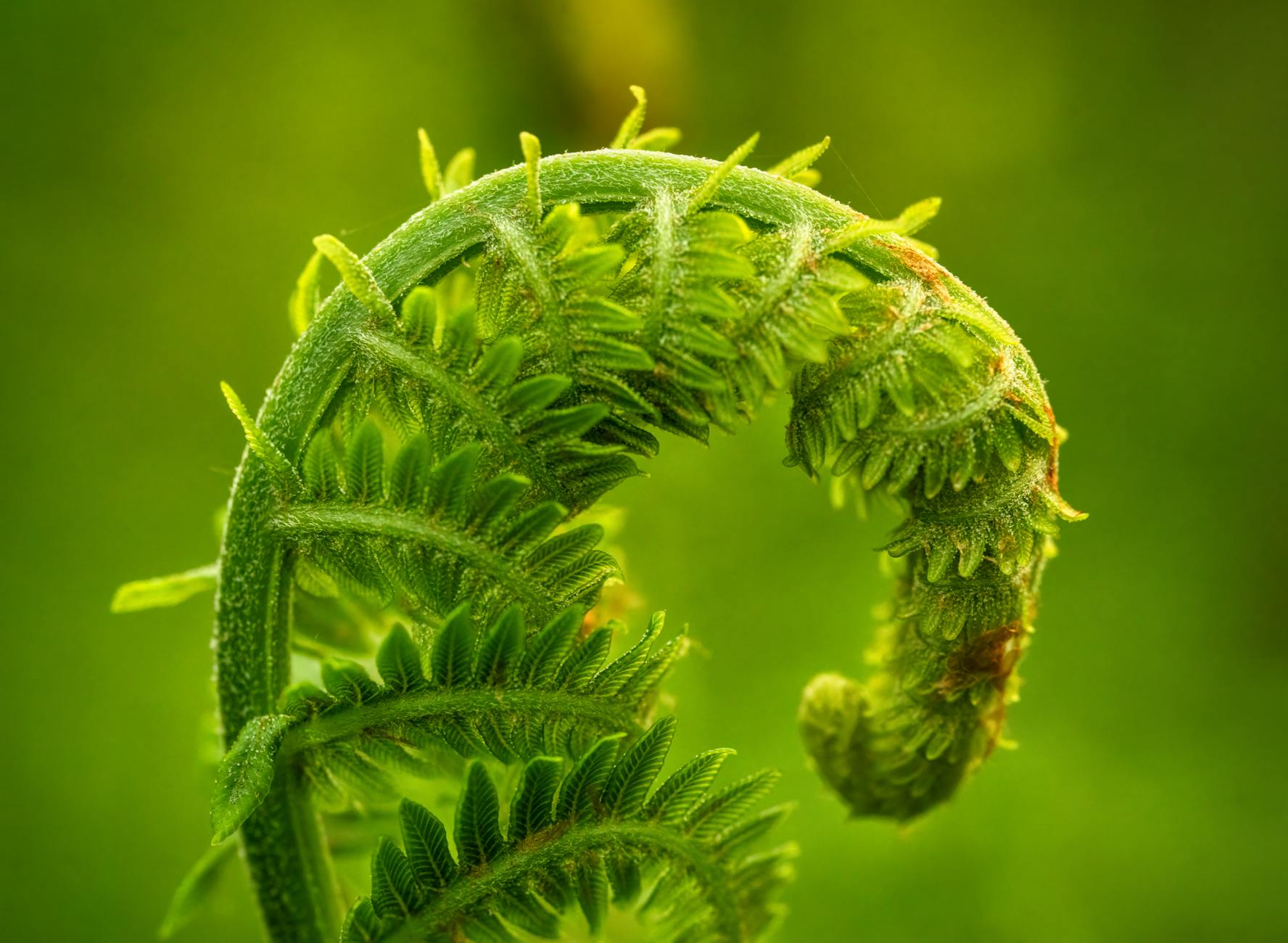
I often feel this presence when I write in my journal beneath a tree, or when I sketch the delicate curve of a fern frond before it unfurls. The daimon is close then, alive in the movement of my pen, alive in the listening. To me, creativity is not about achievement or mastery. It is about responding to the world with a certain tenderness, with a willingness to be surprised.
Creativity is how life renews itself. The blackbird weaving a new phrase into its song, the way sunlight shifts across water until the lake seems to breathe, the child who shapes mud into castles – all are gestures of the same impulse. To create is to let something new appear, to let the stream of life flow more freely through us. When we block it, we harden. When we open to it, we soften.
So many of us doubt ourselves. We say, “I am not an artist, not a poet.” But the daimon does not ask for masterpieces. It asks only that we make space, that we let our imagination place its small, bright offerings into our hands. A few lines scribbled in a notebook, a rough sketch of a bird, a quiet melody hummed while walking – these are enough. More than enough.
And perhaps never more so than now. We are living through a season of uncertainty – with technologies that change faster than we can catch our breath, with the unease of unrest, with the quiet struggles so many carry in their hearts. It is easy to feel overwhelmed, to imagine there is no path through. Yet creativity has always been the human way of finding “another way round.” To create is to refuse to be trapped by what is given; it is to discover that possibility is larger than circumstance.
The psychiatrist and thinker Iain McGilchrist reminds us that the brain itself offers two ways of seeing. The left hemisphere tightens, seeks control, and holds fast to certainty. The right hemisphere opens, attends to relationship, and moves with ambiguity and wonder. Our culture leans heavily toward the left – efficient, precise, but often brittle in the face of mystery. Creativity is the way we restore balance. Each time we sketch, sing, imagine, or journal, we give the right hemisphere its voice again. We let ourselves be guided back into connection with what is alive, fluid, and whole.
Mattias Desmet, who writes about the psychology of society, points to what happens when that balance is lost not only in the individual, but in the collective. In times of fear and disconnection, he says, people can fall into “mass formation,” drawn into rigid stories that strip away nuance and reduce life to slogans. Here too, imagination is an antidote. To pick up a pen, to paint a landscape, to write a poem, is to reclaim the sovereignty of your own attention. It is to refuse to hand over your inner life to the noise of the crowd. Creativity becomes not only personal healing, but also quiet cultural work – a way of keeping alive the possibility of another way of being.
Jung knew that imagination is not an escape from reality, but a return to it – a return to what pulses just beneath the surface of things. McGilchrist and Desmet echo this truth in their own ways: creativity is how we cross the threshold into a fuller reality, how we walk the bridge between what is seen and what is waiting to be seen. In drawing, in writing, in tending the smallest seeds of vision, we learn to soften the walls around our problems. We see new openings where before there were only obstacles.
If we ignore this daimon, it does not vanish. It waits, sometimes turning its energy into restlessness, dissatisfaction, a faint ache that lingers in the day. But when we nurture it – even with the smallest of gestures – something changes. A little more vitality enters. The world feels more vivid, more intimate. The act of creation does not just transform paper or clay or sound; it transforms us.
So perhaps today, as you pause beside a window or step outside into the air, you might ask your daimon: What wants to take shape through me? Do not worry about the result. Simply listen. Perhaps you will write a few words, perhaps you will draw the outline of a leaf, perhaps you will dream a new way of seeing the morning light. However it appears, it will be enough.
The wild remembers. So do you.
