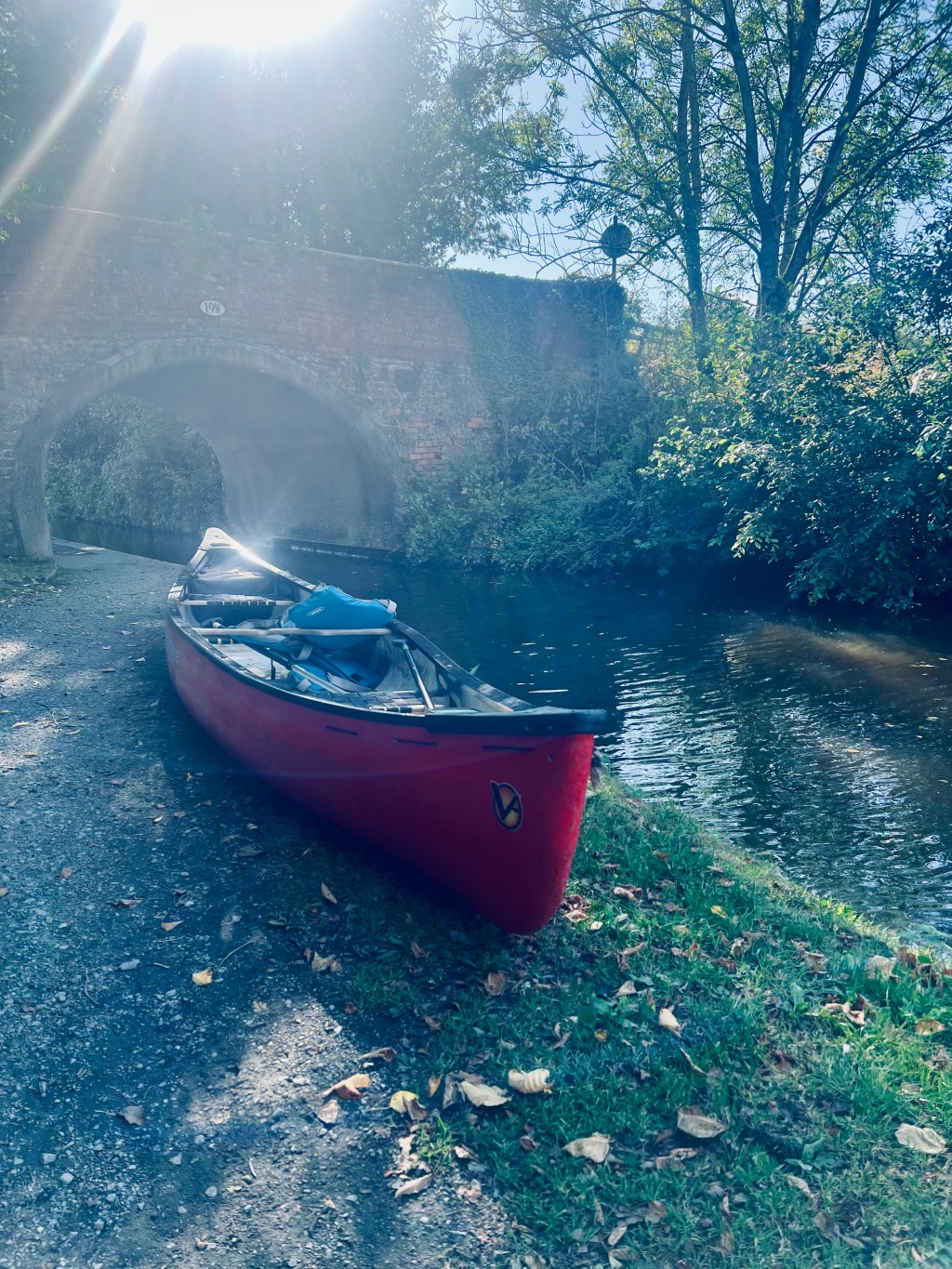
Every bridge is a metaphor, though most of the time we cross without noticing. We move from one side to the other and call it practical, forgetting that beneath our feet lies the oldest human story: how to pass between worlds without losing ourselves.
This red canoe rests at the edge of that story – waiting, patient, almost ceremonial in its stillness. The bridge above it carries not a date but a number – less a memorial of the past than a marker along the way, a reminder that every passage belongs to a larger sequence, each crossing part of a longer journey.
But the first bridge, the one that needed no inscription, was water itself.
Water teaches us how to cross without effort. It belongs to both movement and stillness, surface and depth, light and shadow. To sit beside it is to feel, for a brief moment, that we too belong to more than one world.
In our age of screens, we forget this belonging. The constant glow and ceaseless scroll fragment us into pieces: never quite here, never quite there. And yet the antidote is not another formula, another app, another prescription for balance. It is simpler, older. It is wonder.
“My work is mostly standing still and learning to be astonished.” – Mary Oliver
To pause beside water is to practice wonder without instruction. It asks only presence: to notice how sunlight threads through leaves, how ripples bend the reflection of a tree, how the world continues its quiet work regardless of our hurry.
“Attention is not only what we pay to the world, but what shapes the world we inhabit.” – Iain McGilchrist
To give our attention to water, to bridges, to wonder, is to inhabit a world that restores us.
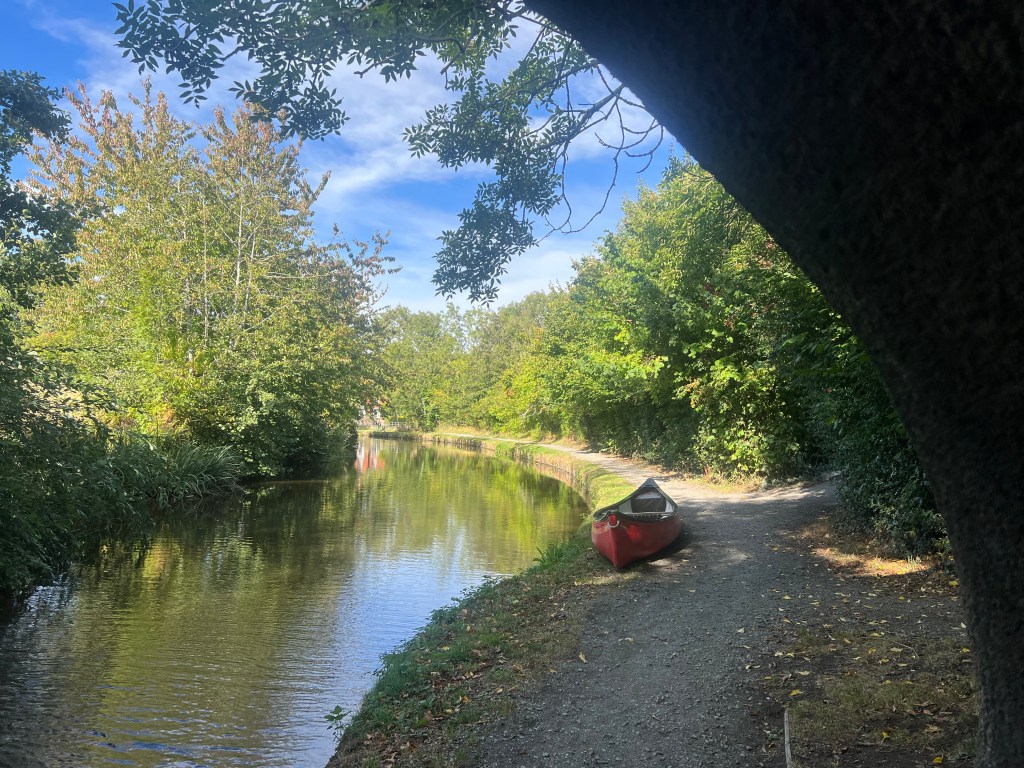
Beyond the crossing, the path widens – water holding the sky, the canoe waiting for what comes next.
Every bridge between worlds begins like this – with water, and with wonder. To remember this is not to escape life, but to return to it more whole.
The wild remembers. So do you.
 Nature Speaks
Leave a comment