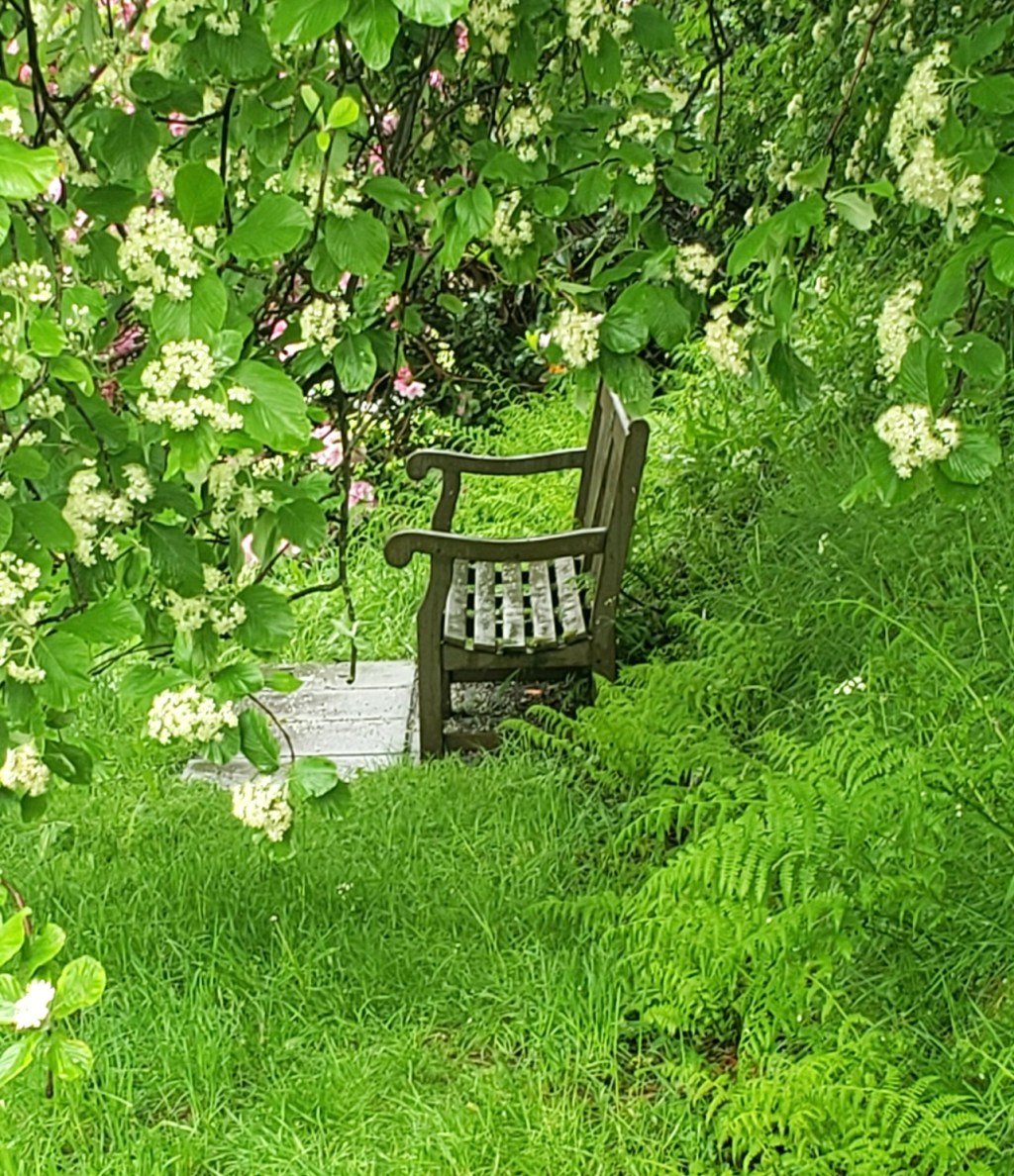
In a culture that rewards speed and noise, to slow down feels almost radical. And yet both science and poetry remind us that the quieter life, the simpler life, the life lived near to nature, is not only gentler but profoundly healthier for the human spirit.
The Japanese practice of shinrin-yoku – forest bathing – has become a modern reminder of an old truth: time among trees steadies the nervous system, lowers stress hormones, lifts the mood. Long before we could measure such things, poets intuited them.
Henry David Thoreau, retreating to his cabin at Walden Pond, confessed:
“I went to the woods because I wished to live deliberately, to front only the essential facts of life, and see if I could not learn what it had to teach.”
This was not escape but necessity: stripped of distraction, the mind begins to settle; in contact with water and wood, thought rediscovers its rhythm.
Modern life, by contrast, confronts us with complexity. Messages arrive faster than we can answer, choices multiply until they paralyse, screens fracture our attention. Carl Jung, wary of such distortions, warned:
“Busyness is not of the devil; it is the devil.”
An overstimulated mind is not only tired but deformed. Simplicity is not deprivation but spaciousness – the psychic room in which we can breathe.
Science, in its slow way of confirming what poets have long known, has shown that even twenty minutes in nature lowers stress, that walking among trees quiets the restless loops of thought linked to depression. Mary Oliver, who spent her life in the practice of attention, said it more directly:
“When I am among the trees… they give off such hints of gladness. I almost feel that they save me, and daily.”
What Oliver felt in her bones, neuroscience now traces in the brain. The forest heals.
Healing, too, comes from the discipline of enough. The economist E. F. Schumacher saw that our malaise lies not in scarcity but in glut: excess consumes not only resources but attention, leaving the spirit perpetually hungry. “Any intelligent fool can make things bigger and more complex,” he wrote. “It takes a touch of genius – and a lot of courage – to move in the opposite direction.”
In a culture of “more,” choosing “less” is a liberation.
Rilke, ever attuned to the subtleties of growth, urged us to “ripen like a tree… unhurried, confident in the storms of spring.” To be human, too, may mean this: to ripen slowly, to belong to the earth’s rhythms, to let simplicity itself be our medicine.
The world will not quiet. But within it, we can choose pockets of stillness: a garden, a daily walk, a candle lit at dusk. These are not luxuries. They are the ground of sanity.
As Wendell Berry reminds us:
“The impeded stream is the one that sings.”
In our slowing, in our simplification, we may rediscover not only calm, but song.
The wild remembers. So do you.
Suggested Reading
- Henry David Thoreau – Walden
- Mary Oliver – Devotions
- Carl Jung – Memories, Dreams, Reflections
- E.F. Schumacher – Small Is Beautiful
- Wendell Berry – The Art of the Commonplace
- Florence Williams – The Nature Fix
- Richard Louv – Last Child in the Woods
 Nature Speaks
Leave a comment