A long-read reflection for a quiet weekend morning.
“The world is full of magic things, patiently waiting for our senses to grow sharper.” – Wendell Berry
There is a story unfolding in silence, not in headlines or screens but deep inside our cells. It tells us that the living world does not just surround us; it lives through us. We each carry a genetic map, but a map is not a journey. Some paths are only traced when the land itself calls them awake. Nature moves softly, yet its touch is transformative.
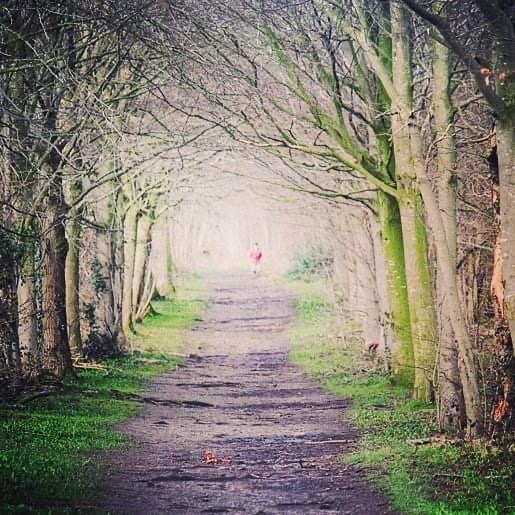
Step beneath the canopy and notice: your breath slows, your pulse softens, something ancient stirs. In Japan, scientists studying shinrin-yoku, forest bathing, have shown that even a short time among trees lowers cortisol, quiets the prefrontal cortex, and brings the nervous system to rest. As one researcher put it, “The forest offers its gift without words; it speaks directly to our bodies.” The forest speaks in chemistry and song, through aromatic compounds released by pine and cedar, through the music of wind and birdsong, through the unmeasurable but felt sense of being held. Mary Oliver once wrote, “I don’t know exactly what a prayer is. I do know how to pay attention.” Perhaps attention itself is how the forest enters us.
The conversation runs deeper than sensation. In Finland, researchers laid down real forest soil in schoolyards and children played on moss, leaves, and humus. Within weeks, their immune systems shifted – gut microbes diversified, inflammation markers dropped. Roslund and her team described it simply: “A biodiverse environment enhances immune regulation, even for urban children.” It is as if the wild remembers us, and the body, when given the chance, remembers back. This is not metaphor; it is biology. Our smallest companions – the microbes we cannot see – leave chemical notes on our DNA, re-scoring its symphony in real time.
This is what epigenetics names: our genes are not fixed fates but living scripts, open to place and experience. Nessa Carey calls epigenetics “a layer of biological control that sits on top of our genes and controls their activity,” and writes, “It is proving that we have a far greater degree of control over our health and happiness than we thought.” David Sinclair, who studies aging, adds, “Only about 20% of our longevity is genetically determined. The rest is what we do, how we live our lives…” The forest, the sunlight, the quiet, the way we love, the way we eat – all of it part of that “rest,” all of it writing in the margins of our DNA. Carl Jung intuited this long before molecular biology: “The environment is the invisible hand shaping our inner life. We cannot separate the psyche from the soil in which it grows.”
Even memory may ripple beyond our lifetime. Experiments with animals suggest that experiences of nurture or stress can leave chemical marks on DNA, marks that can pass to future generations. Dias and Ressler’s study with mice showed that a traumatic scent association altered both brain wiring and behavior in the next generation – the past whispering through the genome’s folds. Though still unfolding in humans, the possibility humbles us: the forests we walk today may whisper not only to our own cells, but to those of children not yet born. Rilke sensed this unseen unfolding: “Everything is gestation and then bringing forth. To let each impression, each germ of a feeling, complete itself, wholly in the dark, in the unsayable…” Perhaps this too happens in our DNA, quiet and unseen, across time.
Long before DNA was understood, Conrad Waddington imagined the “epigenetic landscape” – a flowing terrain of valleys and ridges through which life rolls like a marble, its path reshaped by experience and chance. Our DNA is not a prison; it is a conversation. And the world around us is always part of that dialogue. The river you stand beside, the soil beneath your fingernails, the birdsong at dawn – these are not just scenery; they are participants in who you are becoming.
Perhaps this is why wild places call to us so deeply. Not as escape, but as return. We are not visitors here; we are home. We step among trees, and something ancient stirs, not just in thought but in the quiet scribes of our DNA. Mary Oliver heard it when she wrote: “Whoever you are, no matter how lonely, the world offers itself to your imagination, calls to you like the wild geese – harsh and exciting – over and over announcing your place in the family of things.” Nature remembers. And somewhere deep inside, our cells remember too.
For those who wish to wander further: Park’s research on shinrin-yoku explores the forest’s physiological conversation; Roslund’s Finnish study shows how living soil reshapes immunity; Carey’s Epigenetics Revolution and Mukherjee’s The Gene illuminate how life rewrites itself in response to the world; Dias and Ressler trace inherited memory; and Waddington’s 1940s metaphor of the “epigenetic landscape” still helps us imagine how genes and place entwine.
 Nature Speaks
Leave a comment