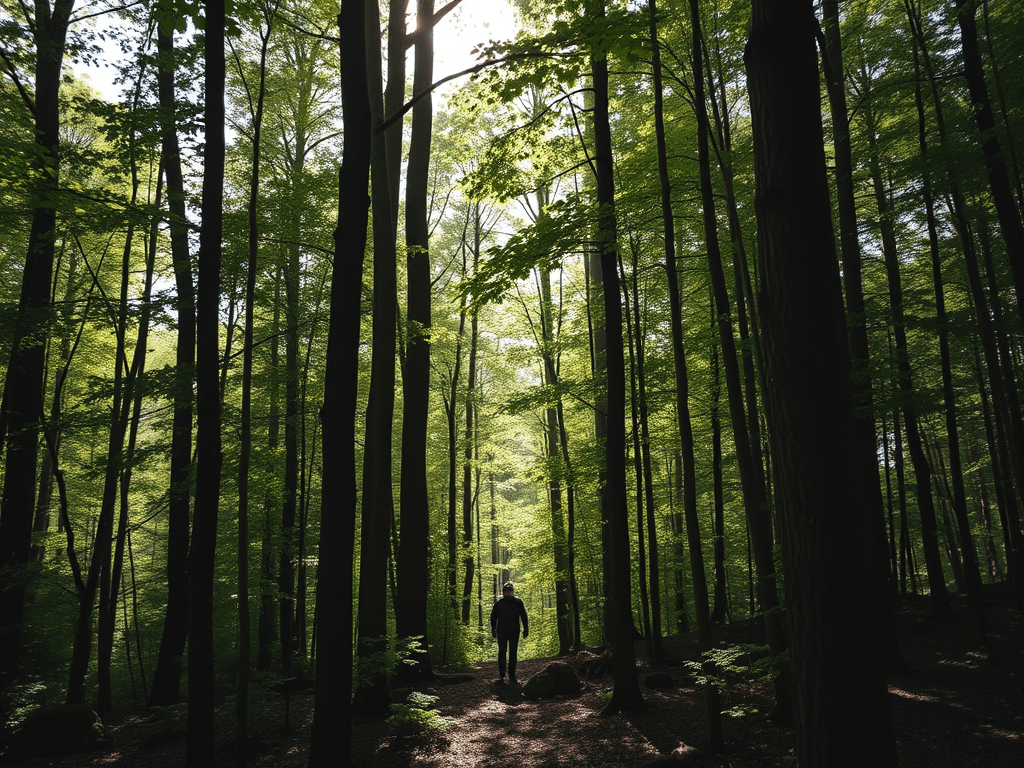
We often think of intelligence as the sharpness of the mind – the ability to reason, to analyse, to solve problems swiftly. Yet, there is another kind of intelligence, older and subtler, one that whispers rather than shouts. It is natural intelligence: a way of being deeply attuned to the world, grounded in relationship, patience, and listening.
As the great environmentalist and poet Wendell Berry reminds us,
“The earth is what we all have in common.”
This simple truth points to a profound reality – our minds are not separate from the living world but woven into its vast web.
The philosopher David Abram, in his luminous work The Spell of the Sensuous, explores how human intelligence is inextricably linked to the intelligence of the earth itself:
“Our awareness is coextensive with the world’s being.”
In other words, to truly know ourselves is to know the soil beneath our feet, the wind that stirs the leaves, the quiet murmur of rivers.
Many Indigenous traditions embody this understanding, recognising that wisdom is not a human monopoly but a shared inheritance with all living beings. The Ojibwe elder and author Robin Wall Kimmerer eloquently captures this sentiment:
“The more something is shared, the greater its value becomes.”
When we listen to the stories of animals, plants, and landscapes, we tap into a collective intelligence that transcends language and logic.
Natural intelligence does not rush or compete. It grows in the rhythm of seasons, the cycles of growth and decay. It invites us to slow down and notice. To embrace imperfection as part of life’s unfolding.
Leonardo da Vinci, a timeless exemplar of curiosity rooted in observation, once said:
“Nature never breaks her own laws.”
This reverence for natural order urges us to align with, rather than dominate, the living world.
In today’s frantic, screen-lit age, the quiet wisdom of natural intelligence offers a refuge – and a guide. It teaches us that true knowledge emerges not from control but from relationship. Not from distance but from closeness.
Rilke’s words, penned over a century ago, still resonate:
“Let everything happen to you: beauty and terror. Just keep going. No feeling is final.”
To live with natural intelligence is to hold both joy and hardship with equal grace, to listen deeply to the world and to ourselves, and to find harmony within the ever-changing flow of life.
Practical Reflections: Living with Natural Intelligence
How can we cultivate this ancient form of knowing in daily life? Here are a few gentle invitations:
- Walk slowly, listen deeply. Spend time outdoors with no agenda but to observe. Notice the patterns in trees, the flight of birds, the texture of stones. As the poet Mary Oliver wrote,
“To pay attention, this is our endless and proper work.” - Practice patience with yourself and others. Natural intelligence unfolds in time, often invisible until the moment of bloom. Like a garden, growth is gradual.
- Engage your senses fully. Touch, smell, hear, see, taste the world around you. This sensory awareness reconnects mind and body.
- Honour cycles. Notice your own rhythms—when you need rest, when you have energy. Align work and rest with natural ebbs and flows rather than forcing constant productivity.
- Learn from Indigenous wisdom and ecological science alike. Both invite us to see ourselves as part of a living community, not apart from it.
Contemporary Examples: Nature-Inspired Innovation
Across disciplines, thinkers and creators draw on natural intelligence to rethink problems:
- Biomimicry, pioneered by Janine Benyus, studies nature’s designs to inspire sustainable technology—from buildings that breathe like termite mounds to fabrics that repel water like lotus leaves.
- Regenerative agriculture looks beyond sustainability to actively heal the soil and ecosystems, honoring natural cycles of renewal.
- Mindfulness and nature therapy programs encourage mental health practices grounded in nature’s rhythms, proving scientifically how time outdoors reduces stress and enhances creativity.
Further Reading
For those who wish to explore the rich terrain of natural intelligence, these books offer luminous pathways:
- The Spell of the Sensuous by David Abram
- Braiding Sweetgrass by Robin Wall Kimmerer
- The Nature Fix by Florence Williams
- Silent Spring by Rachel Carson
- The Web of Life by Fritjof Capra
- The Ecology of Wisdom by Arne Naess
In a world increasingly disconnected from the natural rhythms that shaped us, natural intelligence offers a compass—a way to reorient ourselves toward balance, meaning, and belonging.
It reminds us that true wisdom is not only in the mind but in the body, in the land, in the shared pulse of life itself.
 Nature Speaks
Leave a comment