A long-read reflection for a quiet weekend morning.
Water is never still, yet it remembers. Every raindrop sliding down a leaf, every tide pulled by the moon, every river carving its valley – all hold continuity with the past. The water that fills your cells is billions of years old, borrowed from ancient seas and glaciers, from the breath of dinosaurs and the tears of your ancestors.
Scientists call this the hydrological cycle. Poets call it mystery. Hydrologists estimate that the molecules in the glass you drink have cycled through clouds, rivers, and living bodies countless times. Rumi captured this truth long before science named it: “You are not a drop in the ocean. You are the entire ocean in a drop.”
When you step near flowing water, something in you softens. Neuroscientists studying “blue space” – environments near rivers, lakes, or coasts – find lower cortisol levels and improved mood in those who live nearby. In a 2013 study by White and colleagues, coastal residents in England consistently reported higher well-being than those far from water. Michael Depledge calls this the “aquatic advantage” – a deep evolutionary familiarity with water as life-giver.
But beyond charts and brain scans, there is the felt sense: the hush of a misty morning by a lake, the heartbeat-like rhythm of waves, the way fountains and streams invite stillness in busy cities. Water’s memory may not be mystical, but it is tangible: it carries dissolved minerals from ancient rock, organic matter from forests, even traces of meteorites that delivered its first molecules to Earth billions of years ago.
Carl Jung saw water as a symbol of the unconscious: vast, flowing, and deep. “Natural symbols,” he wrote, “are the truest expression of the psyche’s inner life.” No wonder our dreams so often feature rivers, seas, rainstorms. To dream of water is to encounter the part of ourselves that moves below the surface.
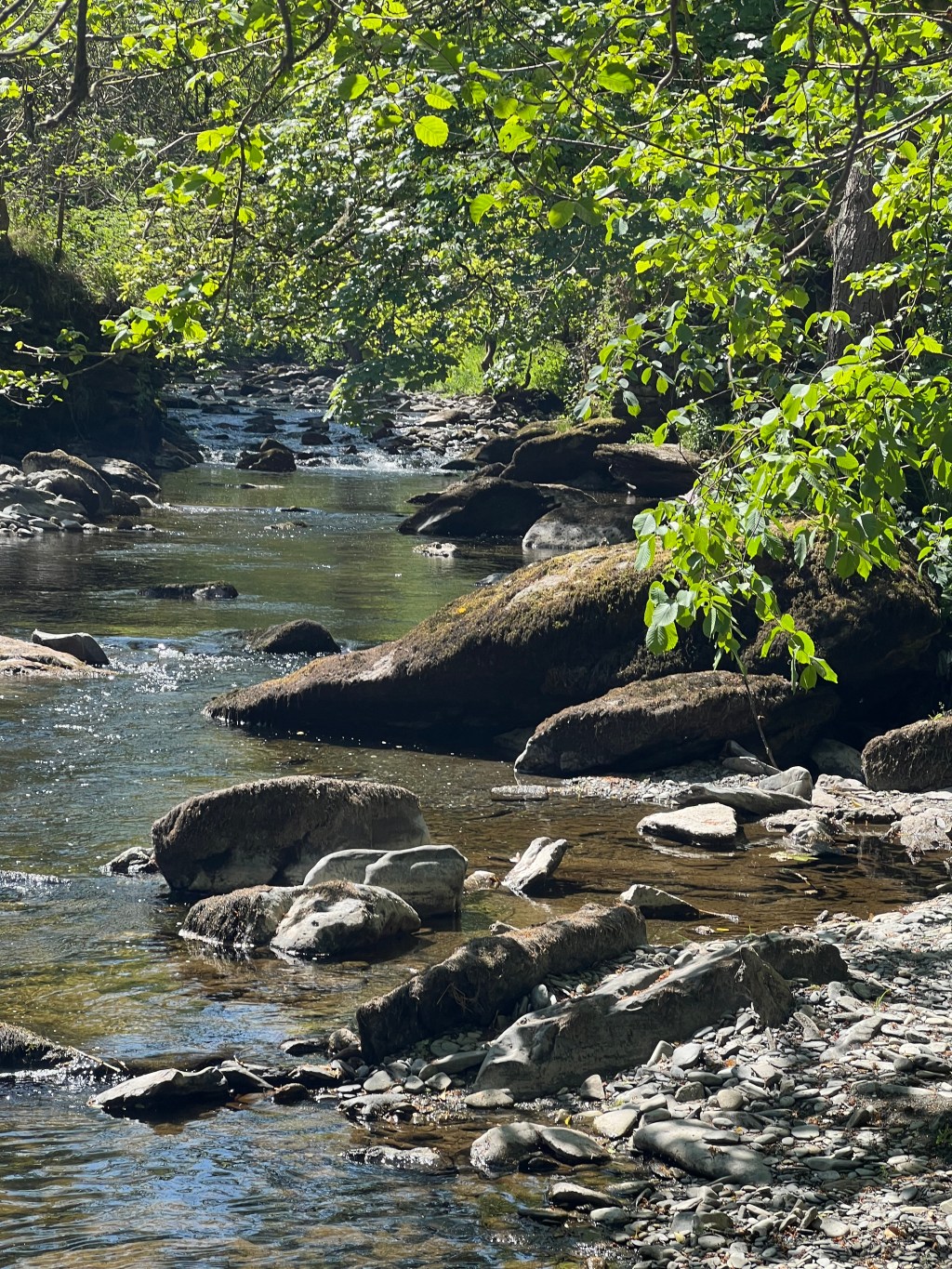
Consider the river near you. It holds dissolved whispers of mountains and clouds, of salmon journeys and forgotten rains. The same water once carved valleys for early humans to follow, quenched the thirst of lions and mammoths. Indigenous cultures have long revered rivers as living beings. In New Zealand, the Whanganui River is legally recognized as a person, with guardians appointed to protect its rights. What modern law is just now catching up to, older wisdom traditions knew: water is not just scenery. It is kin.
And there is a kind of epigenetic resonance here too. Our bodies are about 60% water; our blood mirrors the saltiness of ancient seas. When you cup your hands in a stream, you’re touching the same element that once flowed through trilobites and orchids, salmon and sparrows. The French philosopher Gaston Bachelard wrote: “Water is the gaze of the earth, its instrument for looking at time.” Through water, the world remembers itself.
In an age of climate crisis, water’s memory becomes moral as well as poetic. Droughts deepen, seas rise, floods rage. The same element that sustained civilizations can sweep them away. The glaciers melting now hold water frozen since before human history; their loss will echo for centuries. Perhaps this is why water draws us: it connects our small lives to vast cycles, humbles and steadies us in a restless age.
So go to the river. Stand by the sea. Listen to rain on a roof. You are touching the oldest companion of life. The memory of water is not abstract; it flows in your veins, in the sap of trees, in clouds waiting to fall. Nature remembers. And through water, so do we.
For further wandering: Wallace J. Nichols’ Blue Mind explores how water reshapes the brain; White et al. (2013) provide data on blue space and well-being; Jung’s Collected Works reflect on water as symbol; Bachelard’s Water and Dreams meditates on its poetics.

 Nature Speaks
Leave a comment